When I first learned about erasure poetry, I was enamored with the form. The idea that a poem could be hidden inside any text was intoxicating--a challenge I insist on pushing to the limit. There are so many variables: your source text, your mood, whether you're working by hand or on computer, the marker or pencil you pick up, how quickly your eye scans across the page. I love that there is no one way to write erasure poems, that each writer's process is a little bit different.
If you're not familiar with the form, erasure poetry is a variant of found poetry where words are taken away from an original source text. The source text could be anything--a classic novel, a newspaper, a piece of junk mail, an old letter--but is often a text that would otherwise be considered "unpoetic" (science textbooks, vintage pamphlets, political speeches). The words that remain make up the poem. Erasure poetry is sometimes referred to as blackout or redaction, in reference to the idea of crossing out words with a black marker or line.
I'm not going to talk about the best way to write erasure poetry, because there isn't one. There is already a lot of advice out there if you're interested in adding erasure to your writing toolbox. I recommend "Rules for Writing Found Poetry", a manifesto by E.K. Anderson over at Cotton Xenomorph as a good starting point (everything by E.K. Anderson is gold--she is an actual queen of found poetry). What I'm sharing are 6 styles of erasure poetry I've come across, in the hopes that one of them will ignite your creativity and encourage you to give erasure a shot.
1. CROSSOUT
The type of erasure poem you may be most familiar with, popularized by Austin Kleon's Newspaper Blackout Poems.


comfortable and safe by Isobel O'Hare – http://www.isobelohare.com/product/comfortable-and-safe/
2. COMPUTER
The writer uses computer software to manipulate the source text, using a tool like Photoshop to remove words or add lines.
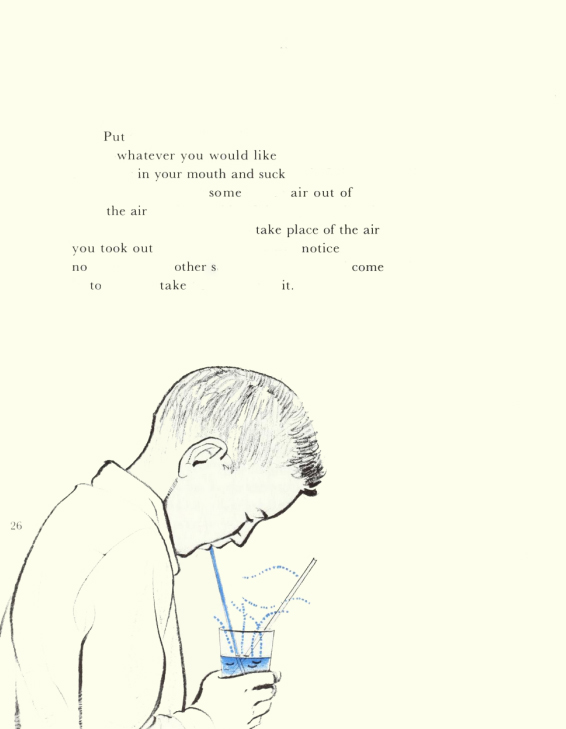

experiments by jenni b. baker - http://www.neworleansreview.org/experiments/
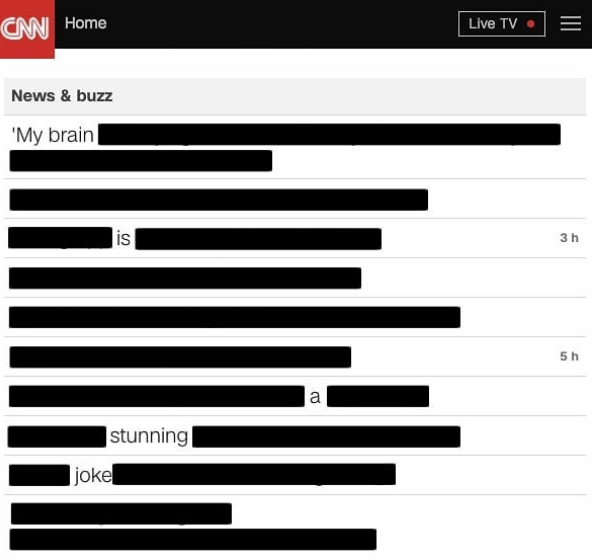

by jaime mortara -www.instagram.com/cnnpoems
3. CUT OUT
Using a blade or X-Acto knife, the writer literally cuts the words out of the paper.
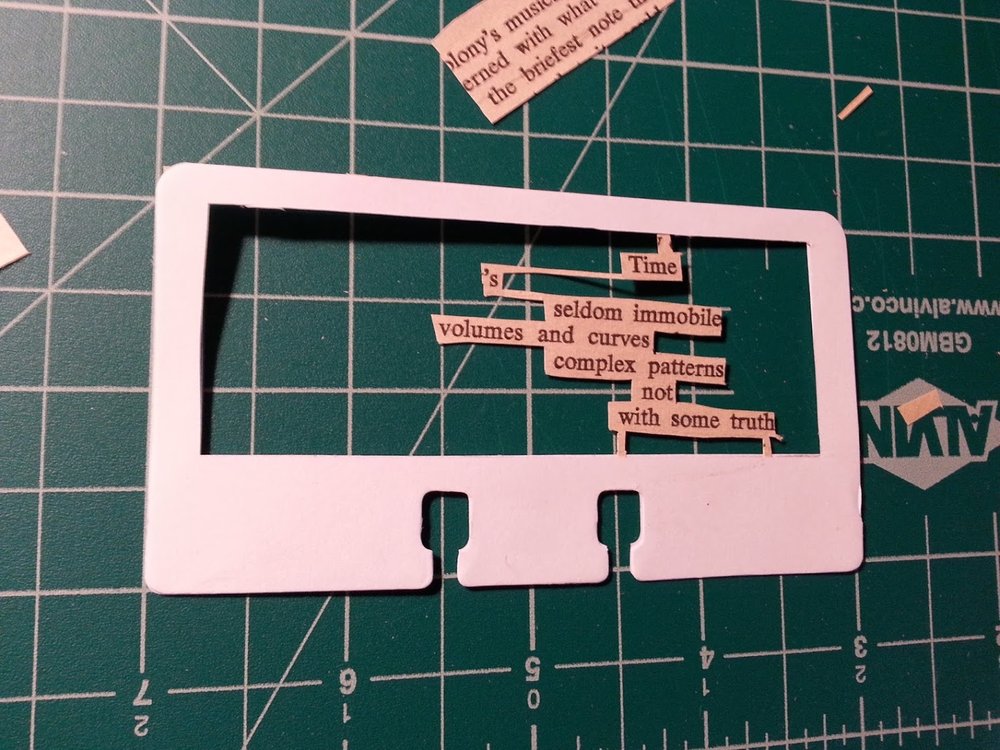

Rotary 23 by james w. moore - http://shop.acontainer.co/product/james-w-moore
4. COVERED UP
The writer covers up the source text using another material--sticks, seeds, flowers, rice, sand, etc.


Strike by Sonja Johanson – http://nightjarreview.com/sonja-johanson.html
5. RETYPED
The writer retypes the poem to make it look like a more traditional poem, sometimes leaving empty space to preserve the original location of the remaining words.


The Deathless Paintings of Susie Norton (excerpt) by Jennifer MacBain-Stephens – http://yr.olemiss.edu/piece/the-deathless-paintings-of-susie-norton/
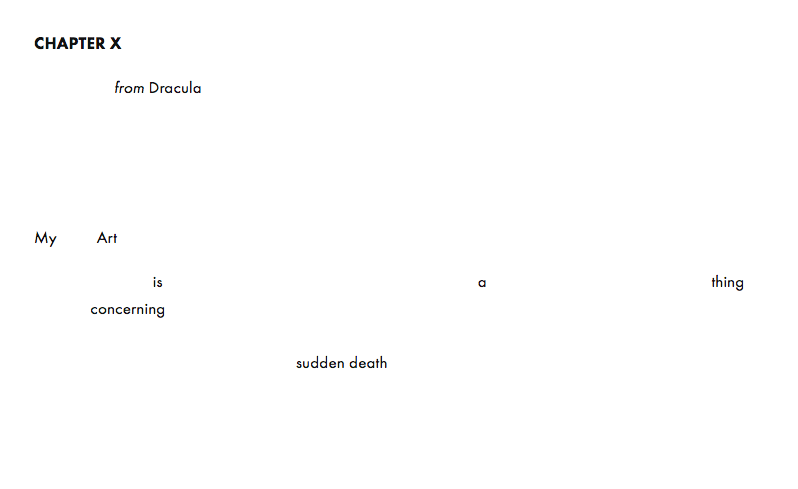

CHAPTER X from Dracula by Chase Berggrun (excerpt) – http://www.menagemagazine.com/chase-berggrun-dracula-erasure-1
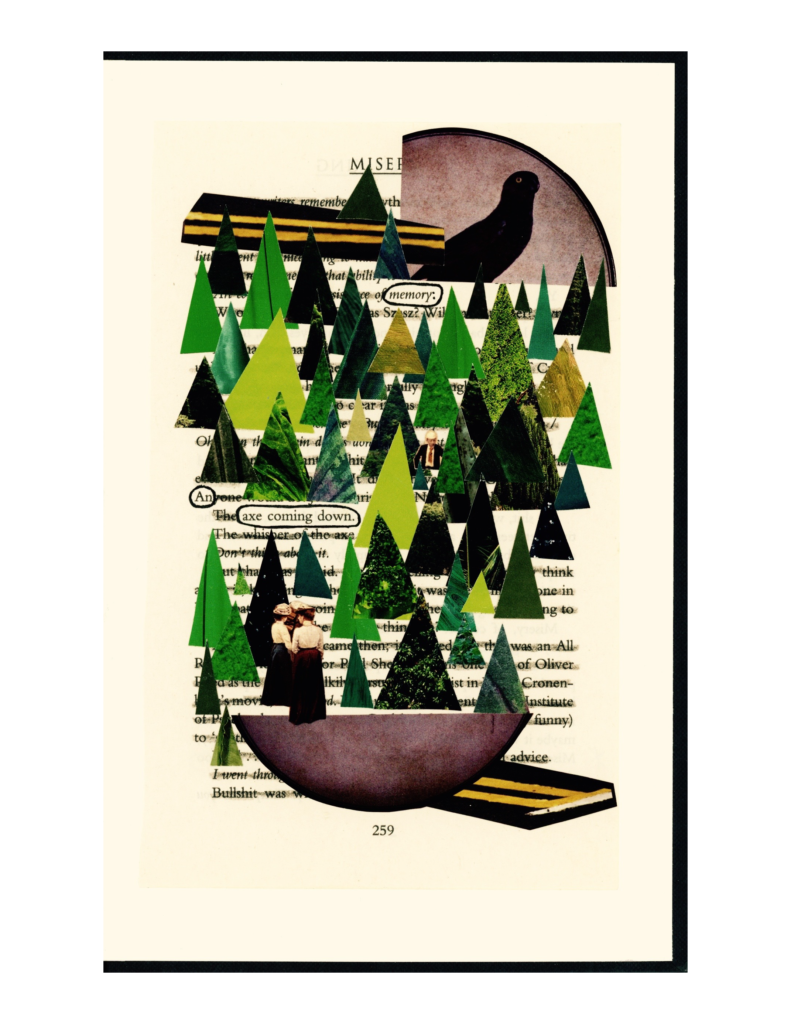
6. VISUAL
The writer incorporates additional visual elements such as collage, drawing, or other artistic decoration.
I went through bullshit by Sarah J. Sloat - http://www.dreampoppress.net/sarah-j-sloat/

Obviously, there is overlap between these styles. A writer could make a more visual erasure using a computer software program, for example. What other styles of erasure have you seen? Which are you most excited about trying?
I Am Not Famous Anymore: Poems after Shia LaBeouf is available now from Mason Jar Press. The collection of erasure poems is sourced from media interviews with Shia LaBeouf published in Rolling Stone, Dazed, GQ, The Guardian, The New York Times, Playboy, and Cosmo Girl, among other publications.
Do you have something say about poetry? An essay on being a poet, tips for poets, or poetry you love? TrishHopkinson.com is now accepting pitches for guest blog posts.
Contact me here if you are interested!