
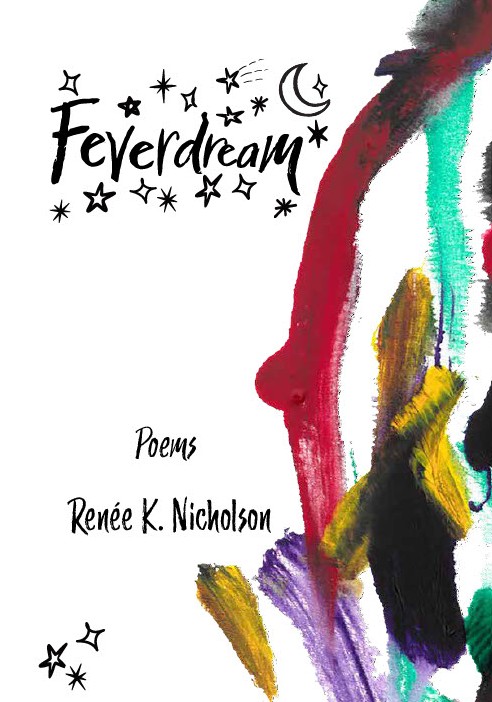

For the artist and writer looking to embark on a similar journey, we’ve distilled our process into a practical roadmap for creating a book that is more than the sum of its parts.
1. Find a Root System (The “Why”)
A collaboration needs a foundation stronger than just “liking each other’s style.” For Feverdream, the root system was Narrative Medicine and the bodily experience. Renée spent two years writing with patients in a chemotherapy clinic while her own brother underwent treatment, experiences that profoundly shaped both the content and the process of writing these poems. Sally’s work, centered on the human form, met those poems in a deeply personal space and allowed for word and image to create a reflective intimacy. The body itself is where external and internal meet, and both the art and poems share this embodiment. The body doesn’t belong fully to either world, which makes it such fertile ground for both poetry and visual art to speak to each other.
Practical Tip: Before you draw or write a single line, define the “third thing.” If the writer is “A” and the artist is “B,” what is “C”: the shared mission? Is it an exploration of place? A response to a specific crisis? This shared purpose will be your North Star when the creative path gets foggy.
2. Practice “Close Listening”
In Feverdream, the poetry and art don’t just describe one another; they dialogue. This requires the artist to read for the feeling behind the words, and the writer to see the rhythm in the lines of a drawing. This kind of close listening and viewing require each to slow down to apply the kind of intentional humility that this kind of dialogue requires.
- For the Writer: Give your collaborator the “white space” to breathe. Don’t explain; let the artist find their own entry point into the poem’s house.
- For the Artist: Don’t just illustrate the literal nouns in the poem. If the poem mentions a “hospital chair,” you might choose to draw the weight of the air in the room instead.
3. Establish a “Slow Art” Rhythm

Practical Tip: Create a shared digital space (like a Dropbox or a dedicated thread) where you can drop “scraps.” An artist might post a charcoal texture; a writer might post a single haunting line or inspiration. These aren’t finished works, but “seeds” that allow the other person to habituate to the mood of the project.
4. Navigating the “Internal” and “External”
Feverdream is rooted in the specific (Morgantown, Appalachia, seven generations of Renée’s family history), but it addresses universal “external” concerns like healthcare. Your book might balance these two poles.
- The Internal: The raw, lived experience (the “Feverdream” itself).
- The External: The world the reader lives in.
When your art and poetry hit both, you move from a private diary to a public offering that resonates with, for example, healthcare professionals, those in grief, and the community at large.
The external world doesn’t just reflect our inner states, as it often distorts them. A room feels different when you’re grieving. The same street corner can hold joy one year and unbearable weight the next. The physical world is emotionally unstable, even when it stays the same. And these can complicate the work that comes from the art and poetry that navigates the space between them, making it more vivid and resonant.
5. The Logistics of the “Hand-Off”
At some point, the dreaming ends and the book-making begins. You must be practical about the physical object.
- Consistency is Key: Ensure the visual weight of the drawings matches the “voice” of the poems. In Feverdream, fine-line illustrations and abstracted painting mirror the surreal yet compassionate tone of the text.
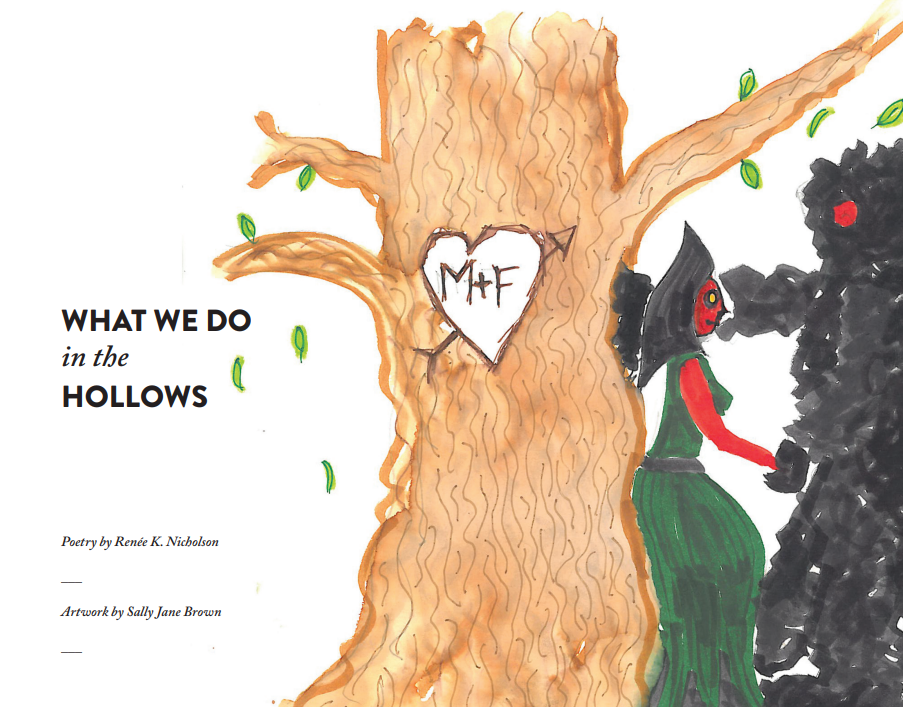
- Design as a Third Collaborator: Consider how the poem sits on the page relative to the art. Does the art lead into the poem, or does it act as a coda, or both? In Feverdream, the poems follow a sequence of sections–Home, Body, Loss, Seasons, Glow–and the art between sections both helps pull those sections together thematically and visually, and also creates space and reflection between sections.
A Final Thought on Resilience
Collaboration is an act of resilience. It is a way of saying that we don’t have to face the “feverdreams” of life, illness, environmental shift, or personal loss, alone. By pairing our forms, we create a sturdier structure for the reader to lean on. It’s also an ongoing conversation for the collaborators, an ongoing relationship that holds both of you over time. Often we make our art during or after difficulty, and collaboration amplifies this. The work becomes evidence of two people’s willingness to keep making, to not go silent.
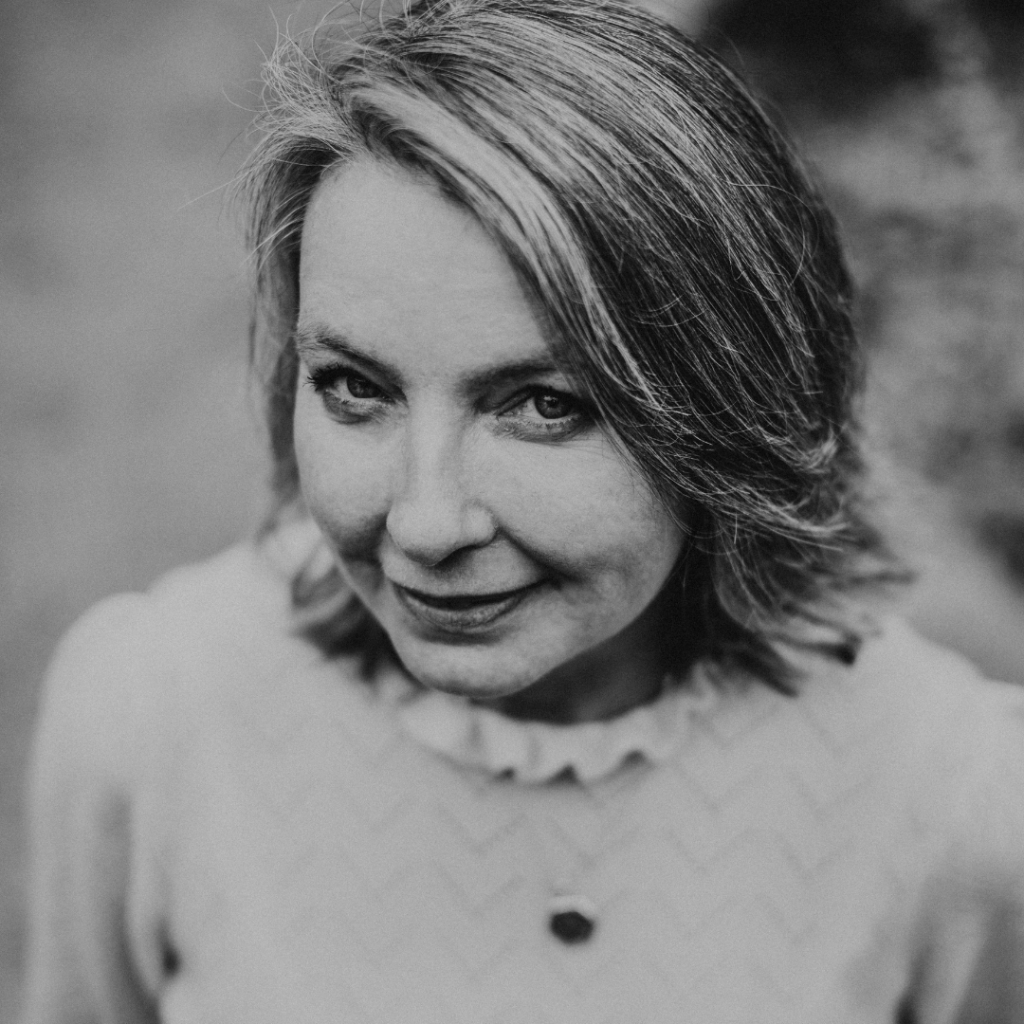

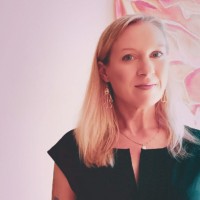

Sally has exhibited her work in spaces nationally and in the United Kingdom. She has won two awards for illustration for Intimates and Fools and Leaves of Absence, both with poetry by Laura Madeline Wiseman. Her writing has been published in Hyperallergic, Women’s Art Journal, and Artslant, among others. She has curated group shows in Omaha, Nashville, Pittsburgh, and Morgantown.
Sally holds a Bachelor of Arts-Studio Art, a Master of Public Administration, and Master of Arts-Art History and Feminist Theory. She is a member of the College Art Association National Committee on Women in the Arts, edited the online journal Les Femmes Folles, and currently serves as Curator for West Virginia University Libraries, art editor for Thimble Literary Magazine, and contributing writer to Borshch of Art Discover Database. Born in Oregon, she spent most of her upbringing in Omaha, Nebraska, and currently lives in Morgantown with her two children and her cat, Chalupa.
If you like this post, please share with your writerly friends and/or follow me on Facebook, Blue Sky, or Instagram. You can see all the FREE resources my site offers poets/writers on my Start Here page.