Every few seasons, I find myself pressed to scroll through the bindings of journals whose covers I shut long ago.
These journals are full of poetry from various eras. A time when I first got the hang of compiling sentences together. A period during which I shifted from heavy rhyming to anything but. A year when I began to delve into the dark recesses of cognition (ah, puberty). In each one, I shape my letters a little differently and hold unique systems for dates and titles. It’s clear that my approach with these old journals is based on simple spontaneity. There’s no end game in sight, no drive for recognition, no motive other than to create.
When I hit my 20s, I started to align my poetic creations with the prospect of publication. I learned that real poets had bylines, or saw their work in print, or had whole books of their poetry sitting on their built-in shelf beside the fireplace, collecting dust but still in plain sight in case the salt spilled.
That wasn’t me, I figured, so I mustn’t be a real poet.
I was 22 when I started diligently submitting poetry. I made spreadsheets about it. I kept track of my submissions. More is better, I figured. With every no, I felt closer to a yes.
When I was finally published in a magazine and paid real money for the work that I produced, the tangibility was almost too good to be true.
My identity as a poet became ingrained in acknowledgement, preferably of the paid genre. It led to publication anxiety, a steadfast obstacle of the creation process. By age 24, my pen was at a standstill.
Now, at age 25, I’ve decided to take a step back from the spreadsheets, the Google Drive folders, the emails. I’ve decided to revert to poetry in a handheld journal, written with a dedicated pen, to tell the stories that need to be told, to spew meaning as it’s meant.
The words are slowly coming back. I’m filling pages faster. I’m becoming a poet again, no contemporary bylines in sight.
Unless I’m a unicorn, I argue that the rest of the poetry world could benefit from a little reconfiguring, too. I feel for the young poets, the ones who unfairly compare themselves to established writers that seem to have the Rubik's cube all figured out. No matter your age, I argue that publication doesn’t define your worth as a poet and creating solely for the sake of it can actually lead to inspiration and success.
For the Sake of the Stanza
I wrote all of my best work while drenched in unawareness. In these moments, it’s not until I’ve regurgitated a full page of verse that I’m able to open my eyes and digest what it is that’s come to light. It’s therapeutic, and it proves to me that poetry is much more than a means to an end. It’s the way, and I shan’t take that lightly.
Take Publication with a Grain of Salt
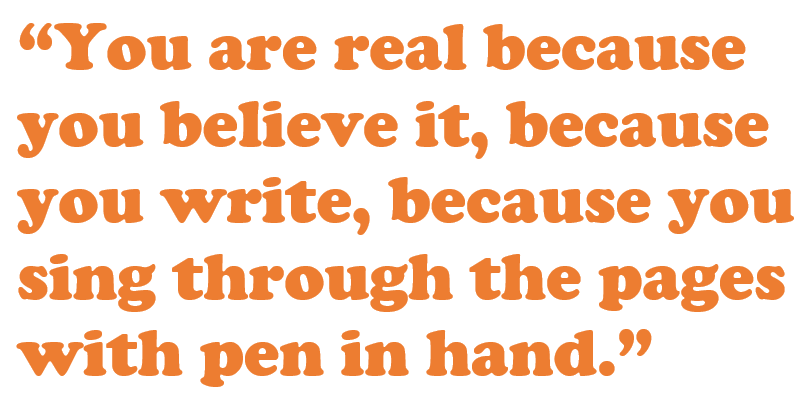
It’s easy to view magazines, literary journals and anthologies as entities unto themselves. The truth of it goes far beyond that. Editorial gatekeepers, however respectable they may be, are just people with opinions. In my book, a library of rejections doesn’t qualify you as an amateur. You are real because you believe it, because you write, because you sing through the pages with pen in hand.
The Natural Undulations of Writer’s Block
Publication anxiety isn’t all to blame. For me, writer’s block comes and goes as it sees fit. There’s not much I can do but succumb to the swell and remain open to inspiration as it arrives. Still, by knowing that my standing as a poet isn’t reliant on books and bylines, the weight of writer’s block isn’t so burdensome, and crawling out of the cave of empty pages becomes easier.
Taking a Firm Look at Productivity
As we push through social distancing, unsure of when life will go back to normal, I believe that the poetry community could benefit from a reassessment of productivity. Is our worth as a poet really based on publication, or should we create just…because?
I’m staying at home, stalling a move and riding out the waves of depression and anxiety. With my current mental state, I can’t afford to write poetry with profit in mind. My well being--my livelihood--it’s counting on poetry as an outlet. I have no choice other than to create with no ulterior motive. I have no choice but to identify as a poet, because I said so, not because some editorial staff did.

Do you have something say about poetry? An essay on being a poet, tips for poets, or poetry you love? TrishHopkinson.com is now accepting pitches for guest blog posts.
Contact me here if you are interested!