
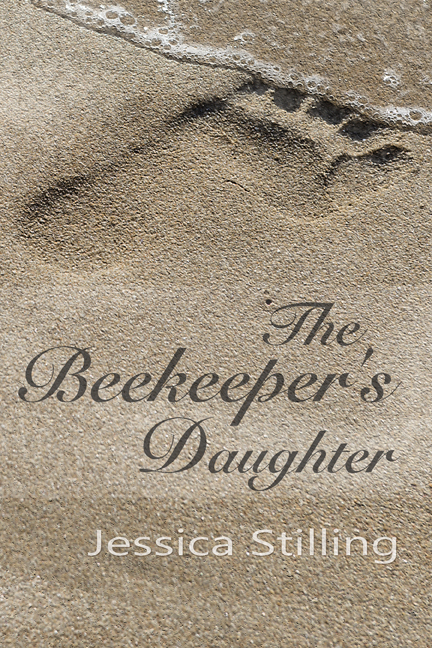
The idea for my latest novel, The Beekeeper's Daughter, came from my love of Plath. In many ways it's The Hours with Sylvia Plath. It is the story of three women, one a modern day woman dealing with modern day, Plath-like problems (mental illness, a cheating husband), another is Sylvia Plath herself, during the time she moved back to London with her two young children just before her death. The third female storyline is that of Esther Greenwood. It’s a made-up story, but it does stick to the plot-line of the post The Bell Jar stories that Plath herself wrote (that survived) starring Esther. In The Beekeeper's Daughter, Esther Greenwood is just out of college and living in London. She's wondering about an old flame while becoming entangled with a guy whose voice is too loud, who drowns her out not only with his large physique but with his overpowering personality (a'la Ted). To research for this novel, I did more than read The Bell Jar many times. There were more than a few biographies and a trip to London to see the house where Sylvia Plath lived with her children just before her suicide. (It is coincidentally the home of the famed poet Willianm Butler Yeats.) But I found while I was writing, after a lot of research, that I really needed to go back to Plath's poetry.

And so I began to read her work. I started with Colossus, since that had been her first collection. After reading Colossus I moved on to Ariel. I blew through both collections and then realized I had to stop, I had to slow down and really take them in. I realized that despite studying English literature and creative writing extensively in college and graduate school, I never really figured out how to read poetry. But as I kept reading Plath's words, I found myself thinking more and more in poetry. I heard poetry in my head the way I used to get ideas for fiction. And as I kept reading poetry, I wanted to write it.
And so the old saying comes back to me: "Writers Read." It's very simple. I had always read novels. I had studied them almost to the exclusion of all other types of writing and so I wrote novels. But Plath's poetry stuck in my brain. I heard it on the subway, I listened for it in quiet moments outside. And as I started to hear her poetry in my head, I started to hear my own poetry as well. The more poetry I read the more I wanted to write it. It seems like another "well duh" moment but this revelation took a while to develop. As any writer knows, when you hear the words of anything, a story, a novel, a poem, in your head, you write them down. You listen to them. And so because of The Beekeeper's Daughter, because of my time reading and truly studying Plath, I found the poetry that had always been drifting in my own mind. Poetry is a very different headspace from fiction writing. It's imagery, it's words, it's a clearer, crisper focus because you are not bogged down by things like character or heaven forbid–plot.
I learned a lot studying Plath. I learned about her struggles with mental illness and I now have a greater appreciation for all those wrestling with various mental illnesses. I learned about her struggles as a wife and mother who still needed desperately to carve her own path, to be her own artist. But I also learned poetry. Not a single lesson, not rhyme or meter or metaphor. Just poetry. I learned that it is the spirit. It is hard work, yes. But it is also a way to just be.


Do you have something say about poetry? An essay on being a poet, tips for poets, or poetry you love? TrishHopkinson.com is now accepting pitches for guest blog posts.
Contact me here if you are interested!

