

Because if there’s one thing we writers are pro’s at, it’s being rejected. Our inboxes are constantly flooded with that “unfortunately,” “not quite,” “best of luck” chorus that so often kicks off a new day—and, of course, make the successes even happier when they do come along. To be honest, I’m just grateful to be living in a cyber age in which I can quickly clear that energy from my inbox without collecting boxes and boxes of printed rejection letters (as many of my most beloved writers from a generation or two ahead have valiantly done). I’m grateful my graveyard of failed attempts can live in a spreadsheet—a tab I can close.
Even so, we’re face-to-face with rejection so much, we can only hope to learn new ways of being in relationship with it (one of my favorites being Mari Andrew’s artistic renditions of the hilariously curt emails she’s received over the years). So this was my newest trick: the rejection jar.
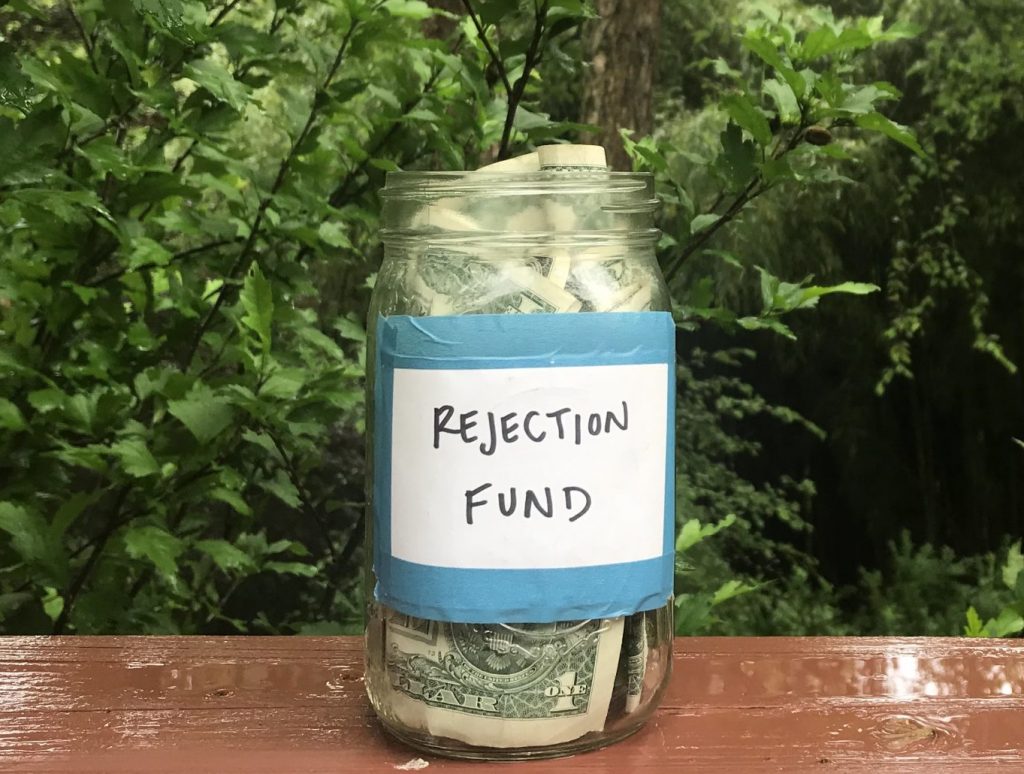
After sitting in paralysis from another form reject for too long, I decided to take things into my own hands. I wanted to give myself something back—a small token of appreciation for showing up for myself in the first place, something that would turn this salty moment into a celebration. I wrote rejection fund on a scrap of paper, slapped it on an old (extra large) mason jar, and have since filled it to the brim.

And you know what? What started as a kind of goofy self-help move has been astoundingly grounding through the submission process—especially as an emerging writer. I realized I now had something to do with all that stalled, stale, sometimes paralyzing energy left over from getting a “thanks, but no thanks” for the work I poured so many hours into. I even found myself looking forward to those emails so I could tip myself again. Something totally out of my control now felt a little more manageable, something I could now take the reins on and say, “no, thank you!”
Because what many of us (hopefully) come to realize, is that not only are the rejections not ours, but the acceptances aren’t ours, either. They have nothing to do with me, and while I can celebrate the successes and grow from the critiques, I don’t want to hang my own worth on someone else’s yes or no.
My rejection jar helps restore a little bit of that agency. These poems I write day in and day out are small new friends, landscapes to grow and warp and feel the world through, come to new selves and new understandings with. They are stamped and sealed only by my acceptance, my rejection. I get to say when they feel like “good” or “bad” poems to me, “ready” and “not ready,” scrap versus actual potential. And then we can see where they might fit—or not—in the external world. Beloved literary editors—sometimes brusque with over-work, but often kind, thoughtful, and generous, too—have their own tastes of what makes a poem a good fit or not, and nothing about these rejections is personal.
Today, I count $28, and I’ve already taken some of that cash for a spin (my first purchases: two new rejection lipsticks, Desert Rose and Voyager #50). That money doesn’t feel like a sadly accumulating pity-puddle. No—it’s just proof I’m still doing the damn thing.

