

In my early years, fumbling with the creative art of writing, I would occasionally stumble upon what I came to call “aesthetic principles.” I’d be hard press to explain what I mean by that term, but suffice it to say they were little tricks I discovered; subtle techniques which when applied to my writing made me a better writer—if only little by little.
Then as fate would have it, I became part of a project which put me in close collaboration with a variety of other creative artists: musicians, visual artists, dancers, an actor/playwright, a poet…even a mime duo. I quickly observed several of these artists incorporating some of the same aesthetic techniques I had stumbled upon. Although our art forms used different media (painters: color and shape; musicians: notes and rhythm; dancers: movement and space; writers: words and ideas) the same aesthetics principles applied to each form. The principles were universal. I further noted some artists using aesthetics principles I had yet to discover; principles more prominent within their particular medium than in writing.
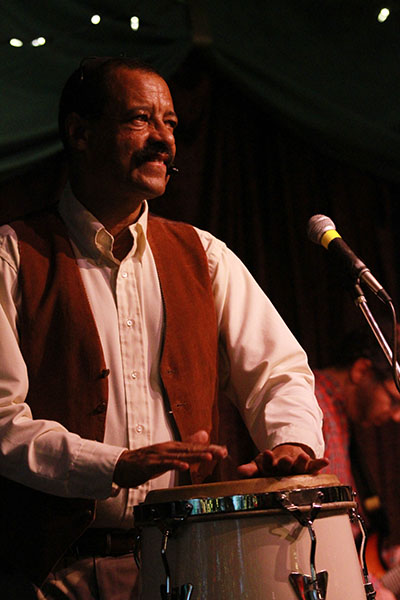
For example, the use of geometry in music. Since adolescence I had been banging on hand-drums and bongos for my own amusement. Through I developed a strong sense of rhythm, I had not, until working with professional musicians, noted the crucial role geometry played in structuring musical compositions and songs.
I immediately began to apply geometry to my own writing: how I structured stories and poems; how I interwove the various threads, characters, themes, subplots, etc. running through my stories. In a short time, my writing took a quantum leap forward. At first consciously, now more instinctively, geometric patterns are an integral component not only in my writing, but in my approach to staging a performance.
Another example: one of my literary inspirations is Ray Davies, singer and songwriter for British 60’s-70’s group, The Kinks. Davies’ great gift as a lyricist is his ability to paint pictures with words. He is a master at stringing a series of vivid images into an easily imagined scenario that tells a full story. So, it didn’t surprise me to discover how, before turning to music, Davies was an art student. No doubt aesthetic principles he absorbed as a fledging visual artist became a central element in his approach to lyric storytelling.
My point is that by dabbling in other art forms, writers can more easily stumble upon aesthetic techniques not necessarily apparent in the craft of writing. Sometimes consciously, oftentimes subconsciously, dabbling in other art forms will add to your own creative tool box.
My involvement in theater is another example. One of my guiding principles in performing is that my audience is half the show. Meaning, if I fail to pull my audience in within the first few minutes, I’ve lost them. Their response will be tepid at best. While performing, I will feel their unresponsive lack of interest, thus making my job harder and my resultant performance a flop. But I’ve learned not only how to grab their attention, but how to hold it the full length of my performance – techniques you can bet I also apply to my written work as well. Intrigue them in the initial paragraph or verse, keep them slightly off-guard and guessing as I string together a series of images which in the end create a full satisfying picture.
Art is universal. As artists we share our insights, our experience, our vision. Readers, listeners, viewers see parts of themselves, recognize their own experiences, in the words, music, painting, dance we present. In a very real sense, creative artists are members of the same family. What should be more natural than that we share common sensitivity and awareness? Each of us has insights to teach our fellow siblings, “ah ha” moments worth passing along for the enrichment of each other, and ultimately, our audience.
So writers: draw, paint, sing, play an instrument, act, crochet, video, become an amateur chef. Anything to stretch your creative muscles in other directions, knowing in the end it will all come back to enrich your own poetry, fiction and prose. Happy creating.
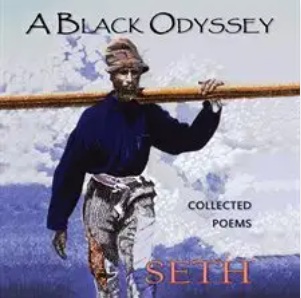

From 2000-2024 SETH headed Art Compost & the Word Mechanics, an elastic ensemble of improvisational musicians inviting poets and spoken word artists to join their weekly jam of music and spoken word. Author of the poetry collection A Black Odyssey and an award-winning satirical novel, The Perfect Stranger, SETH and Art Compost recently released an audiobook to A Black Odyssey in which 28 musicians join him is what he calls a musical-poetic epic, available where most audiobooks are sold. Learn more at https://www.wagingart.com..
If you like this post, please share with your writerly friends and/or follow me on Facebook, Blue Sky, or Instagram. You can see all the FREE resources my site offers poets/writers on my Start Here page.