
Think about some wrong things being pointed out in fairy tales, then think about similar wrong things in our own time and place, and match them up. I’m suggesting this exercise for three reasons:
First, because I hear a lot of people hoping for a “fairy-tale ending,” and not just in their entertainment but also in their lives, and it makes me wonder if it’s really a good wish.
Take “Rapunzel,” for instance. Actually, don’t; that story is sick and disturbing even if you mute what’s really going on with loads of euphemism. So take “The Ugly Duckling”: After bad luck and lots of meanness, its fairy-tale ending comes from superficial beauty and being together with your “own kind.” I don’t know about you, but to me segregation seems more suspect than it does “happily ever after.”

Anyway, since fairy tales had lessons for their contemporary audiences, we can—and should—make them that way again. Re-contextualize. Change the lingo and wardrobe so that the characters look and sound more like us. That way the moral, or the wrong thing that needs to be called out, hits us in the gut and heart again today.
Third, fairy tales are pretty widely known, so you can skip the whole backstory and exposition and jump right into the conflict. Even better, you can play with the setting and plot in new ways without confusing your readers.
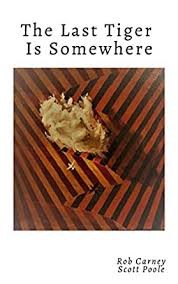
Here’s what I mean. This is one of my own from The Last Tiger Is Somewhere (Unsolicited Press 2020), a new collection by me and Scott Poole: poems reacting to recent news:
HANSEL AND GRETEL
In this one, we know what’s coming:
The kids will shove that witch in her oven,
her shrieks—Oh, Lordy—like knives
in the gingerbread air.
Slam the door
and they’re muffled, then
they’re none, then probably
a smell we shouldn’t dwell on.
But what comes next?
A lot of walking;
birds have wings,
but kids don’t.
Birds can get by on a scatter of seeds,
but not them.
Then finally the border,
and a cage with a Thermo-Lite blanket,
or a cot in a tent next to other tents—
how high can you count?
And how long is each week of this?
Who would invent such slow clocks? . . .
The new witches here have policies
and gingerbread excuses.
They have employee parking and, I guess,
some way to muffle doubt.
I’m not suggesting this exercise because I’m a big fan of Disney. I’m not. And I’m not claiming to be a brand-new-genius here either. The poet Anne Sexton did this in her book Transformations. I love that book and so did Kurt Vonnegut. I’m saying this because I think you might like trying to update the form. You get to be narrative, you get to be subversive, and readers liked these as kids and probably still do.


 |
 |
 |


If you like this post, please share with your writerly friends and/or follow me on Facebook, Twitter, or Instagram. You can see all the FREE resources my site offers poets/writers on my Start Here page.