

Yes, but. How did I leave out sex? Middle-aged lady sex, to be precise. The book is lousy with sex poems. Perhaps I left it out because – despite writing and publishing these poems for the past decade, despite the often wildly enthusiastic response the poems receive when I trot them out at readings – I’m still burning my female / belly with shame, as I write in “Divorce Dinner for Breakfast.”
In popular culture, when middle-aged and older women show up at all, we are most often depicted as either asexual or as cougars, somewhat pathetically pursuing younger men. (No need to get into the double standard here – oo wee.) But, you know what? Many of us continue to be sexual beings. In fact, my libido increased in middle age. Still, I could not have set out to write a book about sex. But because I was doing what I tell my students to do – write what is pounding up inside them – often it was sex: the act itself, the frustrated act, the sheer fact of desire. And because middle-aged and older women are so often silenced or dismissed or worse, mocked, the sheer act of writing our desires is a political act. As the poem, “Tongued,” which opens the book’s second section ends: the tongue writes its own / constitution right here in our beds.
The sex poems take many forms: an ode to the multiple orgasm titled, appropriately, “Ode to the Multiple Orgasm”; an “Abecedarian to the Aging Female Body”; a sonnet in the voice of the clitoris; a poem of extended metaphor; a goofy compendium of the bot (or human?) messages I received on dating apps (it suck been lonely); an even goofier riff on online dating titled “DrBigBeef, or Internet Dating Over 50.” The word desire appears at least eight times in the collection. One poem is actually called “Desire.” I brought an early draft to my writing group and the poet Venus Thrash, who tragically passed away a few years ago, far too young, looked at my short-lined straggly poem and pronounced, “Long lines are sexy, Sarah.” And she was right: the final version of the poem, with longer lines, is sexier, more languid perhaps.
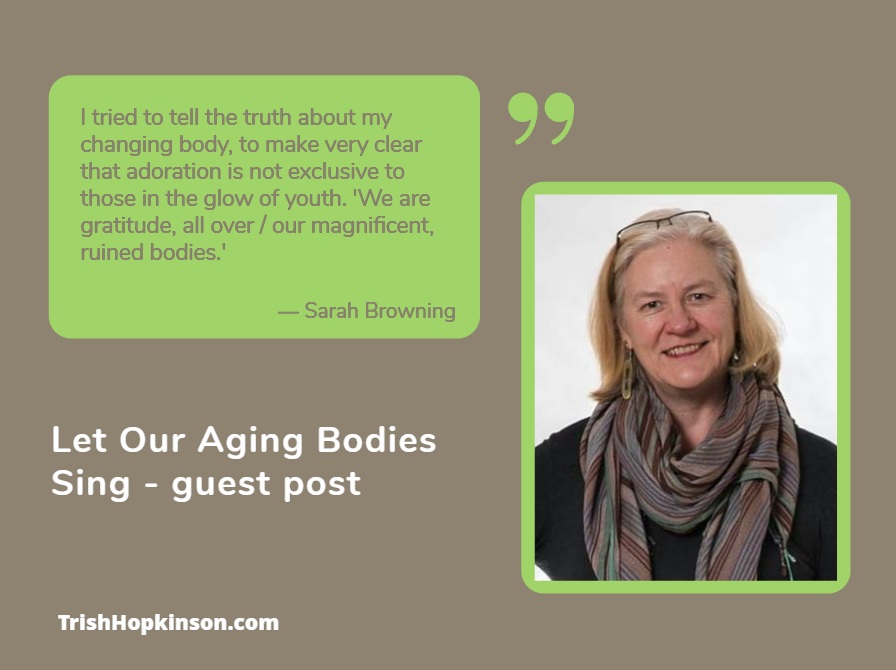
Thematically, the poems are varied too, as our human experience is varied. They are celebratory, yearning, ashamed. One blushes. One tells the story of a single happy youthful make-out session. The ones written in the giddy rush of new love twin sex and love. I tried to tell the truth about my changing body, to make very clear that adoration is not exclusive to those in the glow of youth. We are gratitude, all over / our magnificent, ruined bodies.
I was raised by English ladies, the older generation of whom had themselves been raised by Victorians, if you can imagine. So taboo was the mere fact of female desire, they never once mentioned it. And so, I have spent a lifetime unlearning shame. Committing desire to paper, writing it, was liberating. Or, more accurately, continues to liberate, is in the lifelong process of liberating me.
Role models have helped, as well. I first read Sharon Olds’ poem “Adolescence,” in her 1996 book, The Wellspring. The speaker’s diaphragm “fly[ing] through the air, rim humming / like Saturn’s ring,” and the speaker herself “bowing down,” “kneeling and reaching, reaching for my life.” What? I thought. Poems can be about diaphragms, the messy aspects of sex?? Yes they can. Patricia Smith’s “What You Pray Toward,” her own ode to the multiple orgasm, from Teahouse of the Almighty (2006), includes too many astonishing lines to cite, but here’s one: “the fur do fly, all gush and kaboom on the wind.” And Lucille Clifton’s “poem to my uterus,” with these unforgettable lines: “my estrogen kitchen / my black bag of desire.”
I have to return to these model poets and poems often, to strengthen my resolve, to encourage my courage, because I am still haunted by my grandmother’s frequent admonition, “Don’t make a spectacle of yourself, Dear.” Call Me Yes comes out this fall. I’ll be making a spectacle of myself all over the place, reading from the collection. I’m excited and terrified. I’m worried I’ll lose my nerve when it comes time to read to new audiences. But I will challenge myself. And I challenge you, poets and other creative wonders, to write the poems, tell the stories, let our aging bodies sing.

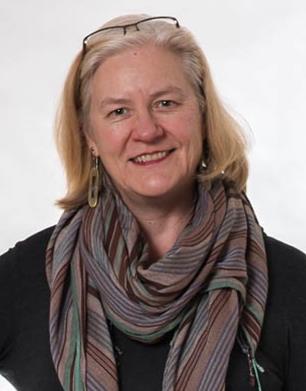
Photo credit Kristen Adair
She is co-founder and was Executive Director of Split This Rock: Poetry of Provocation & Witness for 10 years. An Associate Fellow of the Institute for Policy Studies, she received an MFA in poetry and creative nonfiction at Rutgers University Camden.
If you like this post, please share with your writerly friends and/or follow me on Facebook, Blue Sky, or Instagram. You can see all the FREE resources my site offers poets/writers on my Start Here page.