Having grown up in a working-poor family in which having no more than a high school education was the norm, poetry wasn’t something I knew much about. It certainly wasn’t a path I ever considered taking. Poetry was something other people did, and mostly it was opaque to me. Even in the public schools I attended, I don’t remember much poetry being taught. If it was discussed, it certainly didn’t make much of an impression on me.
But, at the tail end of the 1960s and into 1970s, poems by Rod McKuen and Susan Polis Schutz, for example, were everywhere. Neither poet, as far as I can tell, was given much consideration by critics (McKuen’s obituary headline by NPR, e.g., was “McKuen, The Cheeseburger To Poetry’s Haute Cuisine”). The Poetry Foundation summary of McKuen’s poetry would apply equally well to Schutz: characterized by its “expressions of love, optimism, and heartfelt longing.” As an angst-ridden teen, I was naturally smitten with their work! I began writing my own schmaltzy love poems. My peers loved them, and I began making copies using a gelatin duplicator (or hectograph, as it’s more formally known). I wrote reams of these poems.
Years later, at the University of Wisconsin—Milwaukee where I earned my BS degree, I enrolled in the sole creative writing class I’ve ever taken and came to realize that my high school poems had been abstract and amateurish. Or, to put it succinctly: not good. In that writing class, taught by the wonderful poet James Hazard (who, like me, was from a working-class background), I was introduced to the work of Sylvia Plath. I was stunned by the ways in which she bent words into art. To say that her poetry changed the course of my life is not an overstatement.
Armed with the knowledge I’d gained from Hazard’s class, I began reading contemporary poetry with real understanding—and with a thirst to figure out how poets did what they did, as though poetry were a magic trick, which, in some ways, it is. Reading, in fact, has been the primary pillar of my poetry education.
This isn’t all that uncommon of a route for becoming a poet. Walt Whitman, for instance, was “largely self-taught, he read voraciously.” This leads me to reiterate a recommendation you’ve likely heard before, regardless of your educational background: read, read, read. Read poems that resonate with you and those that don’t. Reading widely will help you gain a better understanding of what you like and don’t like in poems, which will be invaluable as you try to find your own voice. When reading, look at how line breaks were made, the types and quantity of adjectives and verbs the poet used, the specific details and images the poem calls into its service, how the poet moves the poem along to its end, and how the ending works with the rest of the poem. It can also be beneficial to write poems that mimic other poets in order to get a firsthand feel for how they construct their poems, thereby providing you with tools you will need to write poems that are uniquely yours.
 So yes, read poetry, but also read science and history books, read biographies, watch documentaries, be curious about the world, pay attention. The details you garner can feed your poetry, supplying you with powerful images and giving your poems a solid foundation. Emily Dickinson, for instance, “was fascinated by science. She saw the study of nature as part of a larger need to understand the universe and the human role within it” (Rizzo). My own work has been immensely enriched by observing the natural world, often spurring further research and reading. Not every fact I uncover in this process ultimately gets used in a poem, but everything I learn is filed away in my brain for possible use later.
It can be hard to be objective about your own writing, though, especially when you’re new to poetry writing. Poetry workshops can be a real asset when it comes to seeing what others perceive about your poem that you may not. But workshops can also be a bit of a minefield, with people sometimes bringing their own agendas to bear on your work. Certainly it’s important to listen to what others say, but it’s equally important to be able to decide which critiques and suggestions for improvement are valid and useful and which comments aren’t pertinent to what you intend for your poem. It’s a delicate balance between being open to critiquing and knowing when to disregard opinions that won’t advance your writing. Finding or forming a workshop, with the internet so widely available these days, makes it somewhat easier to achieve a good fit for you. When I was starting out and looking for a writing group, the primary means of finding a workshop was word-of-mouth.
Using writing prompts is another way to continue developing as a poet. Such prompts, which can direct your focus to topics or styles you might otherwise not have considered, are widely available. Poets & Writers Magazine, for instance, posts weekly prompts at their website, and poet Diane Lockward, to cite another source of poetry prompts, has compiled a series of craft books with not only writing prompts but also valuable discussions of different aspects of poetry writing, most recently, in The Strategic Poet.
Craft books in general can be an important tool for understanding how to improve your work, and craft talks hosted by poets like Ellen Bass—often with the assistance of guest poets, such as Victoria Chang, Mark Doty, and Ross Gay—perform a similar function.
Eventually, you will develop a critical eye for assessing your own work, but even then, it can be advantageous to have one or more trusted readers look at and comment on your poems. Because, even when you’ve got years of experience under your belt, seldom does a poem come out perfect in the first draft. It can take days, weeks, or even years sometimes to figure out what a poem needs. I am constantly tightening, tweaking, and rethinking poems, trying to find what best serves each of them. Some poets continue revising their poems even after the poem has been published! In sum, my final piece of advice for developing as a poet echoes something I said earlier here: revise, revise, revise.
And most important of all, enjoy the process. It can be exhilarating when the pieces start to come together.
References
- Bass, Ellen. Living Room Craft Talks.
- Lockward, Diane, ed. The Strategic Poet: Honing the Craft. West Caldwell, NJ: Terrapin Books, 2021.
- Rizzo, Caitlin. “Emily Dickinson and the Science of Poetry.” Inside Adams (blog). Library of Congress, June 5, 2013.
- “Rod McKuen,” Poetry Foundation.
- Simon, Scott. “McKuen, The Cheeseburger To Poetry’s Haute Cuisine.” Weekend Edition Saturday, January 31, 2015. National Public Radio.
- Poets & Writers Magazine. “The Time Is Now.”
- “Walt Whitman.” Poets.org.
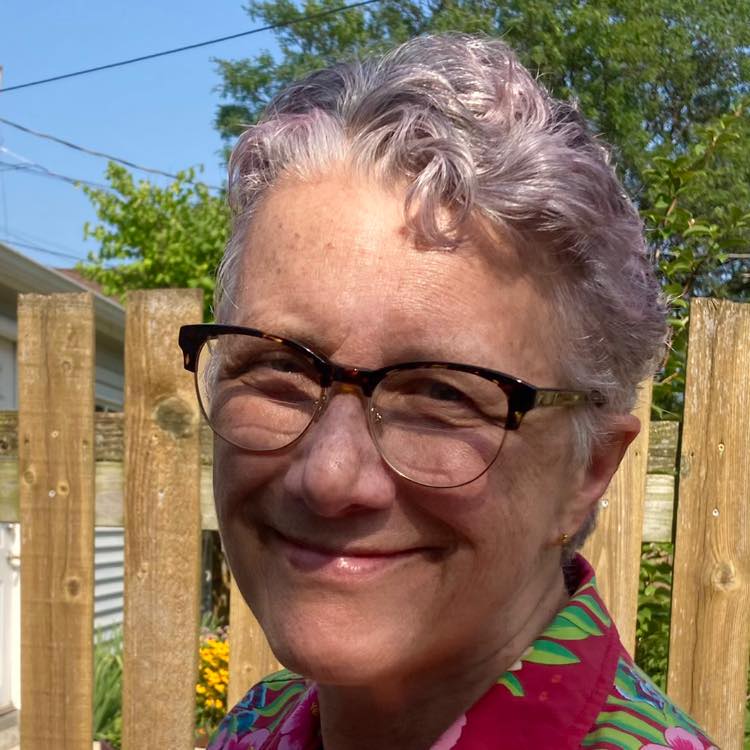 Yvonne Zipter is the author of the poetry collections Kissing the Long Face of the Greyhound, The Patience of Metal (a Lambda Literary Award Finalist), and Like Some Bookie God. Her poems have appeared in numerous periodicals over the years, as well as in several anthologies. Her published poems are currently being sold individually in Chicago in two repurposed toy-vending machines; over the years, the proceeds have resulted in thousands of dollars being donated to the nonprofit arts organization Arts Alive Chicago. She is also the author of the nonfiction books Diamonds Are a Dyke’s Best Friend and Ransacking the Closet and the Russian historical novel Infraction.
- Website: https://www.yvonne-zipter.com
- Facebook: https://www.facebook.com/YvonneZipterWrites
- Instagram: yvonnezipter
- Twitter: @YvonneZipter
Discover more from Trish Hopkinson
Subscribe to get the latest posts sent to your email.
Categories: Guest Blog Posts, Self-taught MFA

This is a wonderful, down-to-earth guest column. Thank you.
Thank you for your kind words. I’m so glad you liked the column.
Thanks so much for this. Very helpful, and I loved the references, I will check those out.
Delighted that you found this essay useful. I hope the references provide you with new avenues to explore.
Great essay. I’m glad you mentioned Ellen Bass’ craft webinars – what a goldmine those are!
Thank you for this article! There’s one site you didn’t mention and that is FanStory. A place for poets and writers alike to display their works and get reviews. Those reviews are priceless, especially for a new poet! It’s 9.95 a month or 99.00 annually and behave me it’s worth it. You can make an acct free to read the works on there, but to write and receive reviews, it will cost! Go to http://www.fanstory.com and get started! My user name is Melodie Michelle and I hope to see you there!