I figure if you’re here at Trish’s website, you must write poems or care about poetry. Me too, three bags full, and yet sometimes I’ve wondered if we poets aren’t a little bit like salmon—working our fins off just trying to hold our places in the current, building up enough energy to leap a poem up the first in a series of falls, then leaping another poem up, then the next, and always working against a river that’s so much huger than we are. But we have to.
And we always have, going back to the first generation. And every year enough salmon make it home so the language arrives—maybe slightly more oceanic from what life of ours we can add to it—and the language lives on.
Or maybe not. I mean, it can feel like not a lot of the time. Like, I care about the planet, animals, Wildness, and I care about the loss of these things, so I write about it often, trying different ways to make a difference, but… I’ve written essays (creative and fact-based), elegies, fables, sonnets, free verse, praise songs, prose poems, a surrealist catalog with some well-timed condemnations; written maps; written new origin stories; written satires like this one and new parables like this one since mocking the snot out of bozos is fun and teaching stories (brief ones) have always been with us and sometimes even work.
Still, there came a day when I couldn’t help thinking that I needed some other something, some form I hadn’t thought of yet that might make a bigger impact, so I wrote a dystopia. Not a novel, a book-length poem in eight movements. I thought maybe I ought to just skip ahead to the ending and make the inevitable near-future the setting so that it’s real, so that people have to feel what the West will be like when the water’s gone. Not ideas, not persuasion and argument, just plain old literary realism that hasn’t happened, not yet, but is going to.
And here’s how it starts, followed by a prompt in case you want to try this too: from The Book of Drought
The prompt
Write a poem set in the near future. I don’t mean sci-fi; I mean the ordinary real, but with some significant change, or loss, or difference. Not a warning about what might be; the loss/change/difference has happened already. Set your poem in this place and time, and use imagery to make the reader feel that loss/change/difference. You, or your speaker, or “the people,” or whomever now live in a world without _____. Present that world.

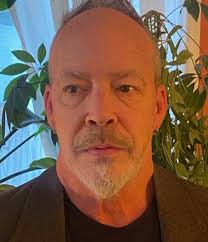
Rob Carney is the author of nine books of poems, most recently The Book of Drought (Texas Review Press 2024) and Call and Response (Black Lawrence Press 2021). He is a recipient of the XJ Kennedy Prize in Poetry, the Milton Kessler Memorial Prize, and the Robinson Jeffers/Tor House Foundation Award for Poetry, and he has written a featured series called “Old Roads, New Stories” for the award-winning online journal Terrain.org for the last nine years. Favorite drink: coffee. Favorite animal: the great white. He is a professor of English at Utah Valley University and lives in Salt Lake City.
If you like this post, please share with your writerly friends and/or follow me on Facebook, Blue Sky, or Instagram. You can see all the FREE resources my site offers poets/writers on my Start Here page.
Discover more from Trish Hopkinson
Subscribe to get the latest posts sent to your email.
Categories: Guest Blog Posts, Poetry/Writing Prompts, Self-taught MFA