 “Ekphrasis” often conjures up memories of going to a local art museum, sitting in front of a painting, and writing a poem about how the artwork makes you feel, your interpretation of the piece, or the mindset you think the artist was in when they painted it. I used to do this from time to time—considering the greats, finally putting the knowledge from my high school art history class to good use. But in recent years, I loosened up paintings’ hold on my own attempts at ekphrasis because it’s just a description of a scene at its core. By that definition, you can write ekphrastic poetry about almost anything, even your hobbies.
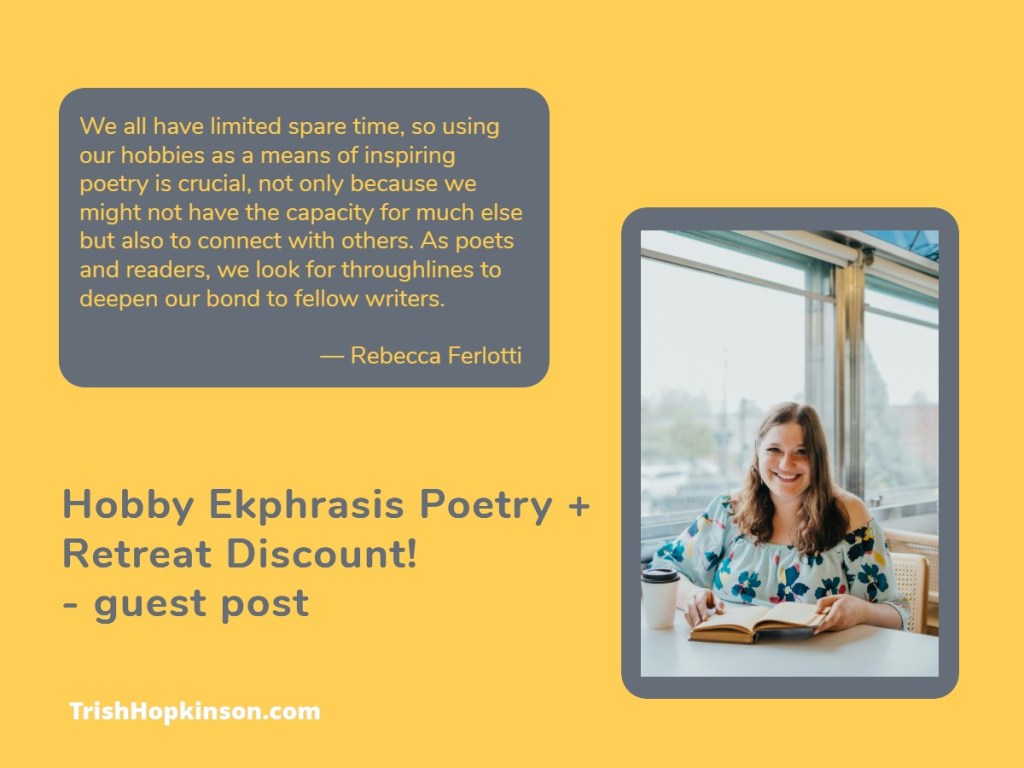
We all have limited spare time, so using our hobbies as a means of inspiring poetry is crucial, not only because we might not have the capacity for much else but also to connect with others. As poets and readers, we look for throughlines to deepen our bond to fellow writers.
We’ve just barely skimmed the surface of what ekphrasis can do because interpretations of what “art” is are disparate. I’ve wandered modern art museums, stunned by the beauty of some displays before reaching a piece that I just don’t get. Someone else might see their childhood, their downfall, their dinner.
Discover your hobby-poetry connection.
Every hobby has aspects about it that can inspire effective, evocative poems. So take out your notebook and:
1. Write down a list of your hobbies.
If you can’t think of any, try to imagine out-of-the-box ways to describe things you do in your spare time. For example, if you spend most of your days with kids or relatives, can conversation be considered a hobby? Do you frequently help build Lego towers…so you’re really into architecture? Or are you doomscrolling YouTube, watching comedy sketches at 2 a.m.? Writing a list is your hobby ekphrasis starting point. Conversely, if you feel you don’t have any hobbies, keep track of everything you do for a week or make a list of the hobbies you’ve enjoyed over the years.
Try food as ekphrasis.
Food is a connector, so it can make for an easy entry-point to hobby ekphrasis if you’re stuck.
As someone who went to vocational cooking school, I view food as my most prized form of artwork. I love vivid colors on a plate. I experiment with ingredients and, even if it doesn’t taste quite right the first time I create a dish, that’s okay. Just as with any other form of art, you dust yourself off and try again.
Vasvi Kejriwal and Saranya Subramanian offered a fantastic ekphrastic opportunity during their “Food and Free Verse” workshop at the Emily Dickinson Museum Slant Festival last year. One prompt asked participants to come up with a dish or ingredient. Then, everyone jotted down the definition, a memory with someone, a place, an animal that reminded them of the dish/ingredient (a la Diane Lockward’s “For the Love of Avocados”), and one additional thing that came to mind. Just as easily, and arguably more impactful, physically put the dish/ingredient or a picture of it in front of you. You could even type some notes on your phone or scribble ideas into your notebook as you follow a recipe. For those not interested in cooking or baking but who love food, consider your favorite snack or set up a still life like Cézanne.
2. Then, be more intentional about your hobby time.
Right after you finish cooking, gardening, etc., sit down for a couple minutes and record any thoughts that came to you before, during, and after. Do this with each of your hobbies, and let it simmer for a week before you reread your notes.
3. Revisit your hobby notes.
After some time has passed and you’ve worked on your hobbies again, take a look at that first note. Do you have anything to add to it? The time away will give you a new or deeper perspective, and your poem should start to come together as a coherent thought. It’s okay if it doesn’t click at first; give yourself more time. There’s no rush to get anything “done;” this is a no-pressure situation.
4. Get your hobby ekphrastic draft down.
Once you’ve got the hang of cataloging information gleaned from your hobby, sit down and do some free writing right after you finish your hobby time one day. Sometimes, it can be difficult to start, so if you’re stuck, try writing about a book you’re reading or recently finished reading. Describe how the cover looks in vivid detail. Write a persona poem using one of the characters. You might be surprised what this leads to; maybe you’ll find a way to connect your draft to a childhood memory or pop culture.
My favorite part about hobby ekphrasis is that, once you hone in on the hobby that works best for your writing, you can use it as inspiration for classes and retreats. I’ll be teaching “Storytelling from the Kitchen” during my upcoming retreat—September 25-28th in Northeast Ohio—along with a more traditional ekphrastic workshop. I can’t wait to see what everyone writes!
For $200 off all pay-in-full tickets to Rebecca’s fall poetry retreat, please put HOPKINSON into the referral field (valid for all applications received until 3/31). Click here to apply.
 Rebecca Ferlotti (she/her) is a writer, poetry instructor, and nonfiction book editor from Ohio. Her work has been published or is forthcoming in Poetry South, The Bayou Review, ONE ART, and other journals. Rebecca’s work also has been supported by the Kenyon Review Writers Workshop. Find her at rebeccaferlotti.com.
If you like this post, please share with your writerly friends and/or follow me on Facebook, Blue Sky, or Instagram. You can see all the FREE resources my site offers poets/writers on my Start Here page.
Discover more from Trish Hopkinson
Subscribe to get the latest posts sent to your email.
Categories: Guest Blog Posts