
Ever hear someone say, “People can do just about anything if he or she can read but they can get along well without math”?
Reality check. Imagine your frustration if you couldn’t do something as simple as balance a checkbook on a regular basis, make change, deal with large amounts of money or understand measurements. Another myth, teachers know how to deal with learning differences in the classroom so the problem will be taken care of early on. While many teachers are better prepared than even twenty years ago in areas of learning differences, the educational maze of getting a child tested can very difficult. Another major problem many teachers often face is the attitude, “Not my child.” Finally, while it is much less prevalent today than when I was growing up, the third myth continues to linger: “Girls don’t need math.”
This is where you the writer enters the picture. The more often parents read about math learning differences in leading magazines, the greater chance they will be not only be educated; they may even choose to have their child tested.
 If you already write articles about the well-known topics of dyslexia and ADHD for popular magazines, particularly parenting ones, consider a wider focus. Characteristics of dyscalculia can appear along with dyslexia and ADHD which makes it even more difficult to deal with when dyscalculia is part of the picture. Some twenty to thirty percent of students who have dyscalculia also have dyslexia[1] and some fifteen to twenty-six percent of children who have dyscalculia also have ADHD.[2]
Dyscalculia can bring to the math reading mixture such characteristics as sequence impairment, as well as spatial and directional difficulties. One of my former community sisters once told me how difficult it was for her to remember the sequence in telephone numbers. That means she probably has difficulty entering a PIN number at an ATM and/or code numbers for security doors. While my difficulty echoed hers, however, it was far more pronounced; I couldn’t remember anything my high school math teacher taught each day. One of my community sisters often jokes that she could get lost inside of a large paper bag even with written directions. As I am somewhat directionally impaired as well, I easily panic when I am driving in unfamiliar areas. And that reality can be dangerous.
Consider writing outside the major magazine market. Contact the local newspaper to suggest an article on the step by step process of getting a student tested. While the information you will be given may sound easy, it usually isn’t. It took a year for my niece who is a teacher to have one of her students tested. Be sure to include the ratio of remedial reading classes to remedial math classes as well as the economic fallout of a local and national labor force with undiagnosed math learning differences. I discovered boys are as likely to have this learning difference as girls; however, usually more boys will get help with reading difficulties. Although IDEA (the Individuals with Disabilities Act of 2004) mandates schools to test students for learning differences, find out the percentage of students who can be tested. In some school districts, there is a cut off number as these students will bring down class averages as well as a lack of funding.
Religious periodicals are also a good place to query for a possible assignment. Several years ago, I received an interesting rejection letter from one such magazine editor. I was told that “the audience is too small for us to consider doing a feature on the topic.” After I read the letter, I checked the magazine’s circulation which was about 24,000. I knew from my research the percentage of individuals having dyscalculia is three to six percent. So the possible number of adult readers was approximately 720 to 1440 individuals.[3] Combine those numbers with the adults who have a constellation of learning differences, the total would be much higher. Also, I wondered how the parents might have responded if they knew their child’s learning difference wasn’t important enough to deserve one article in the magazine.
While October is Learning Differences Month, consider submitting an article focusing on preparing for school. Most parents are in high gear planning for the upcoming year, and, as a result they would be more likely to be more receptive on how to recognize learning problems.
One area that can help your research creditability with both parents and editors is to check with a local college or university for math education professors and/or department. Not only can these professors help you with the most up to date research, they are also looking for individuals to help them co-author articles. During my research, I also spoke to my oldest niece who planned to write her doctoral dissertation on math learning differences. Go beyond the public library and the Internet to check if teaching hospital libraries in your area will allow access to their materials and databases.[4]
Even though education magazines may have already covered math learning differences in past issues, don’t overlook them. They, too, will be interested in what all magazines want—a different slant on a topic.
Whatever your slant or reslant, I would encourage you to address two major issues besides providing information. One, some people don’t believe there is a math learning difference. They, as well as parents, mean well with the comment, “Just try harder.” But what does “try harder” look like for someone who has a different way of learning? The other issue is the attitude, “See how well you turned out, you didn’t need math in the first place.” (Someone did say this to me.) While both attitudes are terribly demeaning, they also reveal just how clueless someone can be in terms of learning differences.
If you also write fiction, consider a short story or a Young Adult novel with the main character having dyscalculia. Go to “Books that Portray Characters with Disabilities”[5] to find out what has been already be published on various learning differences. I have even found success in submitting poetry that expressed my experience.
In conclusion, just one submission can help create a greater possibility for more children to learn and be a success. Think what would happen if you wrote more.
[1] “Strengths found in students with dyscalculia,” online and dyscalculia.org.
[2] “Dyscalculia Primer and Resource Guide” by Anna J. Wilson, PhD., online.
[3] I checked this out with one of my community sisters who teaches math.
[4] I found most of my research material here.
[5] riyl.wikispaces.com/file/view/Booklist-Disabilities.pdf.
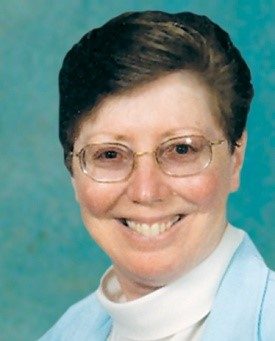 Sister Lou Ella is a former teacher and librarian. She is a certified spiritual director as well as a poet and writer. Her poems have appeared in numerous magazines such as America, First Things, Emmanuel, Third Wednesday, and new verse news as well as in four anthologies: The Night’s Magician: Poems about the Moon, edited by Philip Kolin and Sue Brannnan Walker, Down to the Dark River edited by Philip Kolin, Secrets edited by Sue Brannan Walker and After Shocks: The Poetry of Recovery for Life-Shattering Events edited by Tom Lombardo. She was nominated for the Pushcart Prize in 2017. Her first book of poetry entitled she: robed and wordless was published in 2015. (Press 53.)
Discover more from Trish Hopkinson
Subscribe to get the latest posts sent to your email.
Categories: Guest Blog Posts, Self-taught MFA





I have dyscalculia that was never formally diagnosed. Your guest blogger should note that it is possible to be extremely gifted verbally and to have large deficits in numerical reasoning.
For rknester. You are correct. Thank you for reading my article and responding.
I was delighted to find this article, since this is a specific learning difficulty (UK terminology) that is rarely mentioned and even less understood. I also have dyscalculia, finally diagnosed in my 40s by an educational psychologist I paid to assess me.
I received no help at school, in fact my parents were told I would “grow out of it”! No one explained how that would happen and, guess what? It didn’t. No one seemed interested in the disparity between my abilities in non-maths subjects and in number-heavy ones. I excelled in English I have a good degree but have never been able to pursue the careers that interested me because of my difficulties with numbers as well as attendant spatial, planning, time management and organisational problems. Dyscalculia has blighted my life, condemned me to low-paid unsatisfying work and negatively affected my confidence and self-worth.
I have always wondered where people imagine dyscalculic children go, because adults with this difficulty are scarcely given a thought. Even this article fails to acknowledge the lifelong impact of dyscalculia. Nonetheless, thank you for highlighting this complex and frustrating form of neurodiversity.
Thank you for your thoughtful comments!