 It’s very hard to write about something you don’t fully understand. I did not know the term agoraphobia until years after my first episode at eleven years old. I found it inside of an old psychology textbook. Specifically, agoraphobia with panic disorder.
Panic attacks often come with the symptom of having no way to describe them, especially if you’ve never experienced them before. All I could come up with was “numb” and “weird.” Yes, I also felt like I was dying, like I was having a heart attack, but was too scared to say anything. At the risk of having another one, I insisted I stay home from school. By day three, I was met with “You’re going to school on Monday. You’ve missed too much and it’s only the beginning of the year.”
This was code for: figure it out now, and fast. And I did.
I went to school and suffered through small panic attacks each day. Some days I would be fine. But a pattern appeared: I could feel safe and panic-free in some spaces while completely avoidant of others. I would try to push myself. But my first trip to New York City resulted in my largest, longest, and most severe panic attack. It also made me associate cityscapes with panic attacks.
I doubt I am the first person to use the term “functional agoraphobia,” but that is how I saw it. I could go to school, go to work, go to some functions and appear as a “normal” person. I simply made excuses and avoided places that triggered these feelings. I’ve been to various large literary events and conferences with no issue. But for places that did? A feeling of sinking into the ground by a heavy, dizzying weight.
When Christine Stoddard, a longtime creative partner through Quail Bell Magazine (as well as THE editor), approached me with a set of black and white photos of a New York cityscape, she asked me if I wanted to write poems based on each. I asked her what she was thinking.
“I was thinking maybe something along the lines of being a woman in the city,” Stoddard shared with me.
We had two very different understandings of the experience. This was an opportunity to tell my story—an isolating, difficult to put into words experience—into a chapbook-sized poetic narrative. One I hoped could expose the humanity behind a very misunderstood disorder and its large spectrum of experiences.
Because I don’t look like Sheila Jackson from Shameless. I don’t look like Dr. Anna Fox from The Woman in the Window. I don’t look like what a lot of people expect. So began my goal to tell my story of growing up in a more rural and suburban place and braving a city-based university with said agoraphobia.
A reported story in The Open Notebook discusses writing about disability with six different writers. Kate Horowitz, the primary author, writes, “To write about a body is to expose it.” I would also add “the brain” as well. You could argue that writing in itself is exposure—think of the many memoirs that have probably gotten their writers in trouble that aren’t about disability. But there is an extra weight to writing about your disability in a way that is true to you while also avoiding the stigma that keeps you down more than your disability itself.
The piece also highlights the experience of journalist Keah Brown, who writes about her conditions out of necessity and for the pursuit of accurate representation. For so long, I felt that I was the only one who felt this way. After exploring online communities, I knew I wasn’t.
I pursued my narrative as an autobiographical one. After all, Toni Morrison said, “If there’s a book that you want to read, but it hasn’t been written yet, then you must write it.”
Recall earlier how panic attacks and agoraphobia are difficult to accurately describe. You’ll notice in a lot of media that uses agoraphobia in a sensational manner mostly focuses on the “I must stay in the house,” thinking and less of the physical sensations that accompany it. Or it is from another character that is observing the agoraphobic person instead, their annoyance and frustration with them.
I instead started by looking at the photographs directly. If I were in the photo, what would I be thinking about? Would I be panicking or trying to find coping skills? I then untangled my thoughts and wove them into lines, pursued enjambment to mimic the feeling of catching myself mid-panic attack and refocusing. I plucked out precise words from generative sessions and worked until they painted the “right” feeling.
I also focused on the reality of how difficult it is to heal from agoraphobia like this when women and femmes are presented with real dangers of being in the outside world. There is a poem I included of a police officer in an unmarked car following me at night. There is no clean way to separate “there is nothing to fear about the outside world” and the inherent misogyny and violence against women anywhere. In any case of agoraphobia, there is no “just get over it.” There are many layers to deconstruct and trust to rebuild with the world around you.
Finally, after several years and many distractions from a full-time job and other writing assignments in between, I managed to get Agora into the world.
When presenting this book and its backstory at a recent event, a woman raised her voice, smiled with the smile you would give a baby at a restaurant and said, “I’m so proud of you! Look at you! How far you’ve come! In a room full of people! Yay!”
I stayed graceful, smiling and thanking her, despite it being an infantilizing experience. Maybe if she bought a copy, she would have known better. But until then, I have no choice but to keep writing and representing the way my disability looks to me.
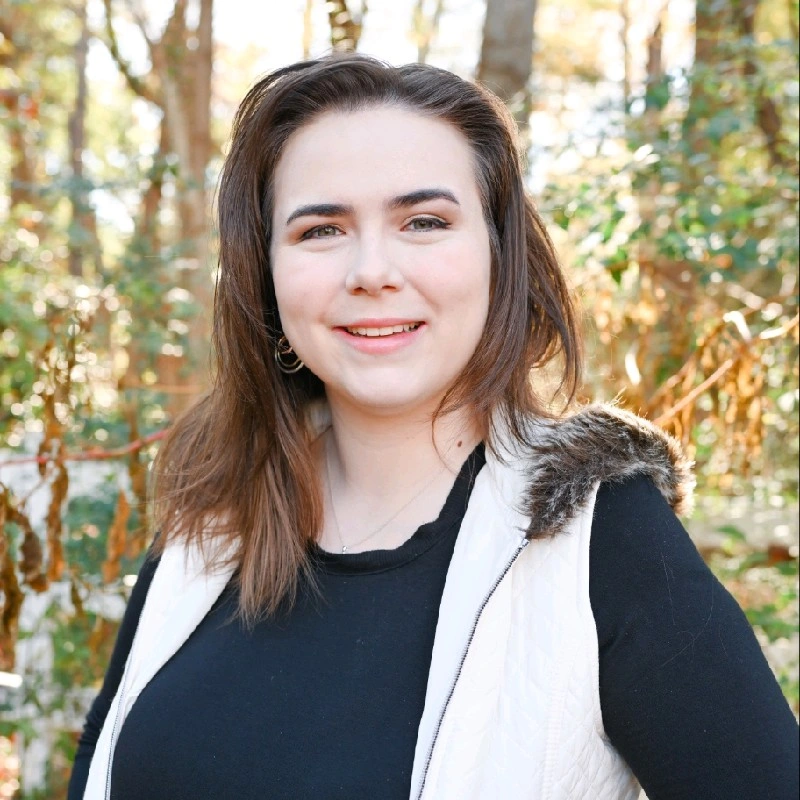
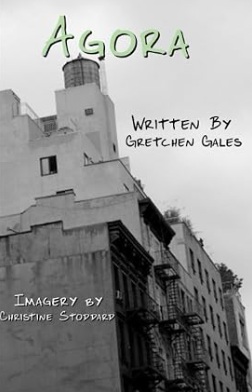 Gretchen Gales is a writer, educator, and if the mood strikes, an artist. She is the executive editor for Quail Bell Magazine. Gretchen’s chapbook Agora(Alien Buddha Press, 2023), a semi-finalist for the Harbor Editions Marginalia Series, is available now. Her work has appeared in Plainsongs, TERSE, Burningword, White Stag, Headlight Review, and others. See more of Gretchen’s work at www.writinggales.com.
If you like this post, please share with your writerly friends and/or follow me on Facebook, Blue Sky, or Instagram. You can see all the FREE resources my site offers poets/writers on my Start Here page.
Discover more from Trish Hopkinson
Subscribe to get the latest posts sent to your email.
Categories: Guest Blog Posts, Self-taught MFA




Thank you is not enough.
Sister Lou Ella Hickman, OVISS
Congratulations! My debut chapbook is also poetry focused on disability – my life with cerebral palsy.