
Poets write the best memoirs. While truth may be stranger than fiction, poets know how to link facts with style, reflection, and panache. The poetic toolkit is perfect for sussing out extended metaphor, controlling rhythm, and tapping into a reader’s emotional core. Together, we’ll dive into some fine examples. We’ll follow with close reading, discussion, and a generative writing prompt.
Walking With Ghost Brothers: How a Walking Meditation Can Connect Truths in Mystery Long Buried
“There are forms of oppression and domination which become invisible”—The New Normal”— Michel Foucault
 Growing up, a prison flanked my backyard. After a local mine closed, my father scrambled to find work. Many of the men in our town had made their living deep underground, too, and needed household-sustaining jobs. Conveniently, the Buena Vista Correctional Facility stood firm across a yucca field teeming with sagebrush and mountain views. My dad was a guard. My friends’ dads were guards. Women taught GED classes, worked in the office, and ran the infirmary. The Ref, as we still call it, began as a boys’ reformatory at the turn of the century, but by the time I started school it had become a serious Colorado prison for men. I sometimes joke that you can take the girl out of the prison town, but you can’t take the prison town out of the girl. It’s not funny, though, just true.
If I were directing my life as a movie, it would start with me driving back to my hometown. The camera would pan over windy mountain roads, and gun-barrel valley stretches of highway scribbled with tar. Overhead, a stormy sky would brew, fractured by an embattled sun trying to knock its way out. Cut to the roadside: work crews from the Ref in drab prison garb laboring near ditches. I wouldn’t make eye contact; I’d study them in the rearview mirror.
The audience would pick up on the fraught landscape and notice the entrance to a railroad-cut valley, punctuated by the enormous Collegiate Peaks. Cut to: Church steeples dotting the township, one grade school, and one high school. Where we used to have a single stoplight, there are now three. Sensitive viewers might notice the rich pastures and the low, snaky Arkansas River, frothing with rapids, hinting at a rough, meandering path.
After a startling DNA surprise in 2020, I became absorbed in understanding the past. Trained as a poet, most of my published work can be found in journals and books I wrote when I thought I knew where I came from. I live four hours away now, in an even more rural Colorado town. When I’m out walking, I’m after sure-footed meditation, listening for murmuration, starling words strung together in a pattern I’m alert to but uncertain where they’ll lead.
When a genetics company revealed I had an older half-brother, I took long walks in an attempt to piece together the mystery of his birth year: 1968, the year my high school sweetheart parents wed after my mother graduated from Buena Vista High School. My father graduated in ’67. A day before their wedding, my half-brother’s mother shared a birthday with her newborn son. She’d turned sixteen, but in a different state. She’d left BV before she started to show. My father fathered her child, a fact unknown to anyone. As far as I could fathom, my half-brother’s mom either never knew who fathered her child or had spent her life trying to forget. With every step around my local pond, I’d contemplate what these odd pieces of the puzzle meant. In the early days of knowing, it was too awkward and painful to look at how the father I thought I’d known was not what he seemed.
The Buena Vista Valley was known for bluebird days, even when we were buried in snow. The skies were often bright blue. Relentless sunlight bore through our knock-off Ray-Bans and aviator sunglasses. My childhood memories take place in both moody overcasts and unyieldingly harsh sun. If I started the movie with my own crimes, we may never meet the ghosts, the shadows on frozen depths. When I began digging up the past, the filter ambered.
In the days when the prison served as a boys’ reformatory, the “ref” boys were let out on leave to eat Sunday dinner with a church-going family. After a kid shot a farmer who wouldn’t let him have the truck keys, the tradition waned. We used to call them “rabbits,” my friend Kari reminded me: escaped convicts in a blind run. Kari’s family owns cattle land a few miles south of the prison. Rusty ranch trucks and beat-up ATVs sit among the horse pastures and towers of hay. She said her father used to leave keys swinging in the ignition of all their vehicles. He figured that if someone wanted a quick escape, why lead them into the house to look for keys? Let them get away quick, far from the family. Classic BV. Most people claimed they felt safe in our aspen- and cottonwood-lined streets. We liked to ignore the barbed wire fences and pretend the acres of imprisoned men didn’t bother us. Maybe it should have.
We were the rural working class. Inside those prison walls, though, the men were mostly urban and not from “around here.” As a kid, I was ignorant of many things—a family secret, for one. My older brother’s mother moved back to Colorado soon after he was born, and she lost custody when he was quite young. He became a foster child not just once but twice, each of us oblivious to the other. I wonder how often I ran into him when we were kids. He was four years older. Same eyes, same dark lashes, blinking through different storms.
In researching my past, I tried to reconcile the BV I thought I understood, the father I thought I’d figured out, and the timeline of events that shaped me. I also began to see the prison in a different light. It finally occurred to me that not only did I not see what was hidden from me, but I also ignored what was right in front of me. When I wrote about my lost brother and my hometown, our missed connections to my lost brother, it was like my body was strapped in a flat rail car, time-traveling through an underground shaft. Hunched and claw-fisted over the computer, this mine of memory rattled with imminent collapse. Sometimes I couldn’t breathe.
To save myself, I walked. I kept moving. My steady pace opened caverns and veins of correlation. When realization and reflection entered from opposite sides, I could take in waves of memory without falling apart. Walking opened gates to a past I could see with fresh eyes. I was not my father’s oldest child, for instance. I was now, suddenly, a middle child. Brothers winged me on my left and my right. That alone would be enough to process. When I found that my new brother’s son was up on federal charges for abuse of power, sexual misconduct, and drug trafficking inside a Northwest prison where he worked, it almost knocked me flat. It jogged memories I had yet to reconcile.
Sturdy soles on solid ground are the only thing that saved me—more than ink, notecards, or timelines. Walking was the only way I could ride this onslaught of memory, the suffocation of cover-ups, and the cold, black lies. I may have looked peaceful to an observer, but as I tread the perimeter of the snow-covered pond near my home, lines swirled and dipped on an overhead page:
Some ghosts never rose from burial or ash. They were not
left for sky or carrion. Some ghosts were never dead.
When I concentrated on the frozen path before me, taking a peppermint from my pocket to press to my tongue, the sun’s glow blanched the snow-crusted ice on the pond. Barren saplings and naked branches made clean silhouettes against the white surface. Well below 20 degrees, my eyes watered. Squinting behind my sunglasses, I blinked hard to clear the blur. The park’s largest tree looked skeletal without leaves. It cast a map of arteries on the pond’s would-be mirror.
Those were not the days of thaw and perfect reflection, but rather, purple shadow on white frost. The tree’s silhouette would be visible for an hour until the sun shifted and the mountain’s shade subsumed its stark limbs. This canvas of crystalline wouldn’t remember the branched impression, of course. I’d be alone with the memory. Dissolved like the peppermint no longer rattling against the walls of my teeth.
Walking doesn’t just provide metaphors or help process difficult memories. It also unlocks space for rumination. Today: silhouettes. In 5th grade, I remember sitting in the projector’s light while my profile bloomed beside me. My teacher traced my image in chalk, following the path of forehead and nose. She studied my whole class this way, mapping our young faces while a hulking machine with its intense beam hummed in the ether. Later, our scissors followed that ghostly line on black paper. We glued them on Mother’s Day cards. Did my half-brother have the same opportunity?
A map of my defiant chin and eyeless stare rests somewhere in a musty drawer or moldering cardboard box. I can picture the wing of lash she extended for the girls. My likeness lies crumbling in the dark now, a face in negative, scrubbed of detail, stuck to a blank page.
I was still trying to understand what it meant to have a new brother. Both of us were adults with grown children of our own. We couldn’t become family to each other overnight. I was wary of all I didn’t know. Compassion rose in me, but it landed somewhere adjacent to getting to know him. I thought starting with the prison history could unravel something for me. And so, I became obsessed with the enormous white warehouse of boys and men virtually concealed from us for years.
I interviewed a retired prison warden I remembered from my youth. It was my attempt to interrogate my origins and corroborate the history and sordid details I’d been learning about the prison. When the warden described his thirty-year tenure, first as a counselor and then as warden of the “joint,” as he called it, he told me about an inmate, a boy who shouldn’t have died in prison. I decided to visit the boy’s small white cross during yet another trip back to BV. The cross clung to a hard patch of dirt in the tumbleweed section of my hometown cemetery reserved for inmates whose bodies went unclaimed.
I don’t know when the young man passed— long before I gave my black-and-white silhouette to my mother. Was I conflating this boy and my half-brother? I couldn’t help but wonder about this boy’s paper trail as well. Where was his memory box brimming with birthday cards and kindergarten handprints? Was there a banker’s box full of court transcripts or a partial account of his records? He was, after all, some mother’s son—a body now buried in a weedy reformatory plot, a boy who became a number in a ledger for the single crime of which he was convicted.
The warden called it a gang rape. He said the boy had sickle cell, and the assault came to pass in a mall two hours from where I grew up. I conjured a storeroom, a blinking fluorescent light, scuffed drywall, and a countertop so dusty you could write your name. According to the warden, they threw the boy on top, the last one to get caught. Wrong place, wrong crowd. Too scared and too frail to run away when things turned rough.
The ghost of that woman’s scream haunts me. Her decibels are gone now, erased, irretrievable save for an inaudible echo. Like the tree tattooed on snow, it’s here with me now. It appears at the edge of my walk, of consciousness, of time. It leaves a wrong and bitter punch, acrid, like juniper, on the tongue.
Walking alone, the resonance bows my head lower, and a chilling hunch drives the empty spaces of the tale the warden told. Did the mother of my half-brother suffer like that? Is that why she didn’t know who her son’s father could be? Under the crime scene, under the room’s suffocation and cum-slick floor, under the mildewed foundation, under water pipes and my Rocky Mountain ancestry, under wet, red clay, arrowheads lie flat. I can almost see them, dulled by time and disregard—a flashlight outlining a jagged edge neglected by time, illumination after the dig. We’ve been doing this for years: corralling workforces to guard outsiders, sending people to reservations, extracting to the point of depletion, and dividing our humanity into binaries of “us and them.”
Burial, so much to bury in plain sight. Crime under a crime, sinkholes of memory, bodies of land unable to forget. It finally hit me one day: we lived in a segregated town. Stitching together the character of where I come from requires the excavation of truth, and the truth was that the whiter population guarded men predominantly of color.
BV is a picture postcard, a tourist town with a correctional facility tattoo, a town with sparkling rivers and Western lore, but some days, as I walk, I’m preoccupied with both my ghost brother and the boy the warden mentioned. Maybe the boy was a kid brother, the easiest one to snare. I picture a bleeding snow hare expired on a winter pond. I picture my ghost brother; I picture a man, many men, faceless, blank—black and white stripes echoing in the forever of a mirror reflecting a mirror, reflecting another mirror.
As a member of the small-town populace, I would have been a ghost to that boy, just as I was to my half-brother. I was a dot on the map, a speck in the valley beneath a ragged mountain range, a single point in a gnarl of lots on the outskirts of town. I was as indecipherable to them as they were invisible to me. The boy existed as one among a mass of the incarcerated. My half-brother endured as a face in the hall, another kid at Bible camp, while I was a girl with secrets, some she didn’t know she could tell and others she couldn’t fathom existed. My father? The man with secrets, too.
As I walk, half in a trance, I notice the path’s many spectacles in my periphery—ravens feast on pink entrails, and my boot leaves imprints like a tire tread. The pine trees are stalwart, holding the last of the blizzard’s dregs on their boughs. In this walking meditation, I carry his burden to the bare tree’s outline, the shadow, and finally to the sunset’s erasure.
I turn to the archives when I get restless and itchy. When memories lurk larger than I can withstand, I seek out newspapers, governor’s reports, and articles. After interviewing the warden, I played back my recording to hear his reedy whisper and full-throat laugh, still full of mirth after his long stint in the dark loom of that prison. Somedays, I’m in the salt mines, trying hard not to salt my wounds. It’s these walks that allow me to take in the bigger story.
I wrote a poem once that implied I was a reformatory girl. That isn’t exactly the case. I stood in its borderlands. I lived outside that white monolith, that century-old prison, but I’d been free of bars and slamming gates. Now that it’s a full-fledged prison, Buena Vista State Department of Corrections seems like a long name, a sterile assortment of consonants without olfactory sense, memory, or taste.
Oldtimers still call it the “Ref.” They’d say it used to have a dairy, suggesting cool buttermilk, hinting at warm cream, but I know some of those first boys ate gruel. Some of them starved. Guards threw them in the “hole,” according to an 1895 report to the governor by the State Board of Charities and Corrections; some were left to freeze to death in bunkhouses. The report cites other violations of the boys’ human rights. Is it any wonder the valley saw so many escapes?
When we called the prison a reformatory, the boys were held without determinate release dates. They worked long days to plant, harvest, build, and sweat; their labor was sold to local farms while local men, including the warden in charge at the time, profited. But dairy sounds nice, sounds like the good old days.
The warden I interviewed had a son. We went to school together. Joe rocked a thick pelt of brown hair and smiled with a shy, half-grin. He’d waggle his brows and flash a gap-toothed smile if he said something funny. In third grade, Joe used to let me paint his fingernails with magic markers when the overhead lights went out, and the Friday afternoon film projector started in with its click and purr. We couldn’t care less about the decades-old instructional films. But the nail decoration? He loved it beyond reason. We had to stop, though. Joe’s dad didn’t like it. Joe would give me his hand, then pull it back fast, but he’d always reach out again after a week or two, eager for me to go to work on his nails. The scent of those sweet fumes made us slightly high, little addicts.
Joe posed for silhouettes, too. We all submitted to the light. I remember the teacher minimized the boys’ eyelashes when outlining them. Later, Joe became the quarterback and the valedictorian, and I graduated without shoes. Not because I couldn’t afford them. I simply shed them before our procession, just after we donned our red and white gowns and adjusted our tasseled caps. Maybe I was trying to ground myself or just wanted to leave my mark.
When town folks were allowed to take a reformatory boy home on furlough, feed him supper—maybe a little chili and cornbread, sugar cookies for dessert, they’d let him play frisbee in the yard with their kids, then send him back to his cot on the block. Maybe the crimes those reformatory boys committed were not unlike the infractions the father hosting the dinner committed sometime in his youth. Maybe the father had more connections, and maybe his skin shone a shade that police often forgave, or maybe he knew someone in authority who could keep his ass out of jail. The correctional pendulum swings relentlessly from reform and rehabilitation to warehousing. It has swung from indeterminate sentencing to the long-term storage of incarcerated men.
When I run down the list of 1971 “crimes upon admission,” there are bad checks, short checks, accessory to forgery, joyriding, and theft (mostly theft). But here’s the trick: not all the men, most being 19 years old, were in for small infractions and minor narcotics charges. A few young men were sent to the reformatory after committing heinous acts, acts which make us all feel righteous that we lock these guys away. There’s the rub: the good tumbled with the bad. Outside the prison? Same. Bad guys everywhere, good ones too.
My poem “To the Girl from the Reformatory Town” includes this section:
Keep your hair blown back, baby, and charged with the horizon line.
Ignore the periphery of prison men in orange. Their 40-ounce cans and
spent shells are their business, not yours. Disregard the jackrabbit carcass
and its fur, which still clings but will sail away soon like dandelion seeds.
Remember, it’s not a charm, and their sentence is not your sentence; you
can’t do that kind of time.
I see it now. My fear is right there under the shift to the second person. It’s the poem’s “I” disguised under “you.” Under the fear was more fear I couldn’t know then. Knowing who and what I didn’t want to become was only the first layer. Time shows us that prisoners and guards are more alike than we want to think. Just yesterday, a news story, a CIA agent, and a priest were caught for predatory crimes. Bad guys on the outside. Bad guys who should be protecting us. Sometimes the bad guys live under our roof. Some ghosts are found in the annals or under the floorboards. Some ghosts loom in the nightmare at 3 a.m. You open your eyes, and your father’s spittle seems real in the blue light of the moon. His blazing eyes materialize. You can smell the sawdust scent deep in his denim. A belt unfurls and snaps. You pucker your buttocks, the lash whips in the air, slapping your skin. Which ghost crime did you commit? You don’t know. It’s too faint to catch. You realize the nightmare will ebb eventually. Shadows fade like winter’s sun over the heart of a tree.
My father wasn’t an alcoholic. His father and all my uncles, maybe, but not him. He didn’t drink. He didn’t need booze to set off his rage. Fourth-grade math homework could unhinge him in a snap: my sloppy eraser marks or my disinterest in the numerical value of numbers. I told too many stories in my head. It was a time of veritable innocence when we all thought I had only one brother. Scratch under the surface of where you came from, and you’ll find paydirt. Shame is the recoil after the trigger clicks, after watching too long as ravens disembowel their prey.
In my hometown, they drew a dividing line. Us versus them. As the prison grew larger and the local mine hired fewer, a radical shift occurred. Former miners tracked home all that fear and spite on their boots, untrained and ill-equipped to deal with the stress and the violence, both their own and those of the confined and agitated. They left dread smeared on the welcome mats of their three-bedroom, one-bathroom homes. Prison can breed a mean discord if left unchecked. When my father joined the ranks, he habitually cast himself as a good guy. When people said the prisoners had it easy, he never countered the general rumblings or sneers at free dental care, TV, and education. Rehabilitation was an eye roll when rot suited them fine. After months of layoffs or a bad economy, our criminals became easy targets for the bitterness of the working class.
It snowed the day I first met my half-brother. We all traveled to Denver to meet for lunch. My husband and I arrived first. The hostess seated us in the restaurant’s canopy tent, space heaters warming the Covid-time tables while we sipped coffee. Finally, he and his wife emerged in an obscure form through the blurry windows. But when he neared our table, I got a better peek. I recognized my eyes in his, bright green and spiked with black lashes. I recognized my father’s posture, my father’s mannerisms, his pink complexion, and his balding pate. Every grain of truth I thought I understood about my place in my family opened like a new planet under the scope of DNA.
Under every history is a tripwire, taut and true, hidden among the tangles and brush, a fate no one suspects.
The day I first found out about my half-brother, I’d looked him up online. The only photos I could find were of him as a boy on his wife’s Facebook page, but my searches oddly came up heavy with articles about an arrest. It was then that I found the damning evidence of his trouble. His son, Will Jr., had dozens of articles spelling out his crimes. A sonic boom sounded in my chest. Sandhill cranes may as well have fallen from the sky. Will’s son faced federal charges for having sex with female inmates. He smuggled cell phones, meth, oxy, and heroin into the prison where he worked and got caught. My half-brother, Will, didn’t want to bring it up. It was months before he said,
“I guess you read some stuff online.”
“Yes,” I said.
“He loved her,” said Will.
I wasn’t sure he meant his son’s wife or the woman he used while she was in prison under his “protection.” To ask meant opening a door he wanted shut. This changed the way I looked at my new brother. It had taken him so long to address it. I know the father’s sins are not the son’s and vice versa, but my stomach still lurched, and my walls shot up. More coverups, lies by collusion. It reminded me of someone else I knew.
It may have skipped a generation, but my father, as a guard, was fired as well. The warden I interviewed saved this bit for last. It was a silence between us. I wanted to talk about history, and yet he remembered the one thing I wished he hadn’t. I’ll never forget how the warden leaned in during our interview, “I fired your father,” he whispered as though he wanted forgiveness and for me to say I didn’t blame him. The warden actually let him resign. The brotherhood conspiracy of good old boys helping each other also extends to adversaries. It extends when it’s not even consciously executed.
During our chat, I’d grown too comfortable and revealed what I’d hoped to conceal. I knew about the firing, but I didn’t want him to think that’s why I came. I wanted to get his take on the prison’s impact and narrative before confronting him with my findings, but I spilled the truth about my recently found brother, and my armor fell. The warden shared so many stories that I broke open myself. I wish I’d remained stoic and professional, but wood smoke curled in the room like a spell.
Lulled by a fire and such warm and open conversation, I didn’t ask about the sexual harassment allegations that brought about my father’s resignation. When Will and I speak on the phone, we never talk about his son. Instead, we recognize that we both have memories time-stamped the same day. He tells me he often bounced from his mother’s arms to foster care, repeatedly landing in my hometown.
As Will and I talk, we’ve come to understand that we occupied the same spaces, our orbits intersected with uncanny regularity. This new brother, born four years ahead of me on the day of his mother’s sixteenth birthday, haunts the shadowed edges of my town. When I think of an event or a place, alpine sled runs or hollyhock-lined driveways, I have to ask, was he there…or there?
My little brother, after learning about our long-lost older brother, said, “I feel sorry for Will that he didn’t have a dad, but mine beat the shit out of me so…”
In every house we lived in, fear and secrets troubled the air. Prison guards as sexual predators. They run in the family, though I don’t think they’d characterize themselves that way. My eighteen-year-old father, engaged to my mother, and out of high school, encountered Will’s fifteen-year-old mom, and sperm permeated egg. No one seems to remember what happened that night over fifty years ago. But I can’t help but wonder that if Will’s mother hadn’t moved away so soon after his conception, perhaps my father would have been arrested for statutory rape or worse.
I haven’t spoken to my father since news of the DNA link broke. Branches of a tree lead me to this. Silhouettes and snowed-over tracks remind me of family lines. My father and I have been estranged before, and now that he can’t bear to own up to Will existing in muscle and bone, I realize he’s the one to ghost.
One step at a time, I sort through the facts, and the braided story unfurls like rabbit brush in bloom. It’s bright and hard to miss as I travel back in time. Revelation lies in the weaving. The truth is old as evergreen. Men used to be able to hide their sins before DNA ratted them out. The shape of this story adjusts only slightly with time, growing taller above ground, sprawling, and intertwining in the dark.
I walk in order to write, exhuming layers deeper than my own story or the story of the boy, deeper than the story of my brothers or of the native people who held our valley sacred. I’m lifting the lid on spoiled systems, my father’s crimes, and those of my half-brother’s son. There are too many forgotten tales of the boys held at the reformatory and the men who lived and died unseen behind the wall, but there is a deep connection. I’m finding it step by step. Mycelial fibers coil under every footfall, spectral, related, and unseen until the thaw. Meanwhile, ravens circle back to sky.
Memoirs are made by making words appear on paper, and yet so much work happens in the blank white expanse of a snowy path, begging to be trodden. This path I’m on covers footprints of so much that’s come before.
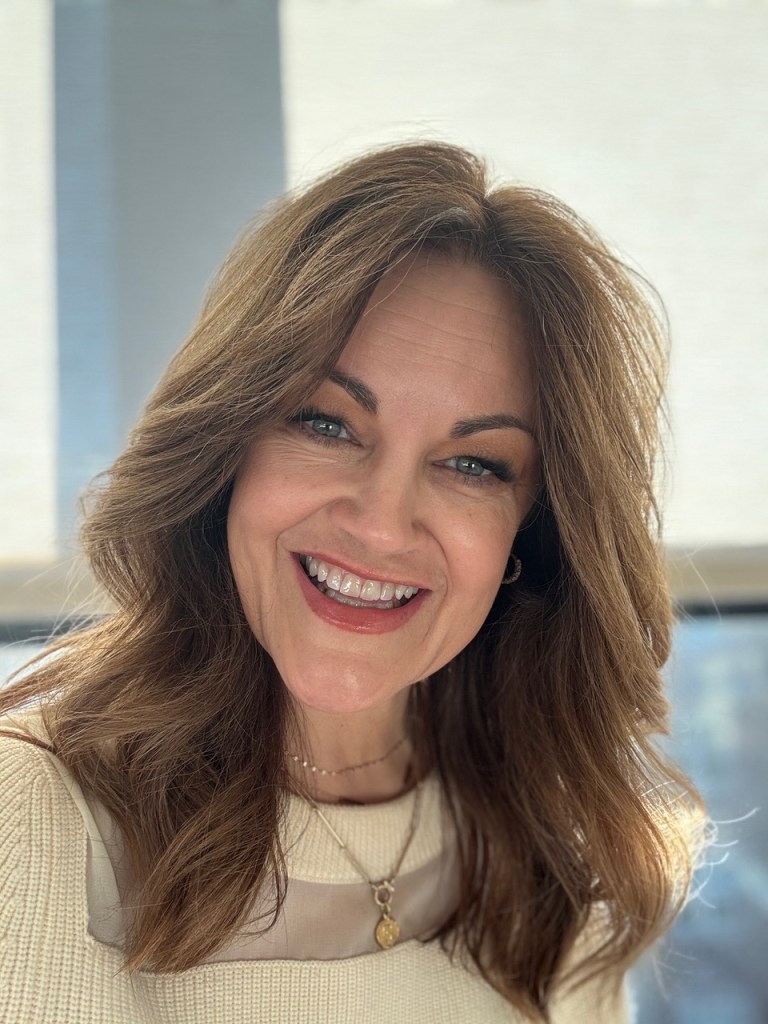 Kierstin Bridger is a Colorado writer with two published poetry books, including the 2017 Women Writing the West’s Willa Award-winning book, Demimonde from Lithic Press. Winner of the Mark Fischer Poetry Prize, the ACC Writer’s Studio prize, and short-listed for the Manchester Poetry Competition in the UK, her essays, poetry, and short fiction have been published in POETRY Magazine, NYQ, Twenty Bellows, Prairie Schooner, December Magazine, and Hobart Pulp. She earned her MFA from Pacific University. Kierstinbridger.com
If you like this post, please share with your writerly friends and/or follow me on Facebook, Blue Sky, or Instagram. You can see all the FREE resources my site offers poets/writers on my Start Here page.
Discover more from Trish Hopkinson
Subscribe to get the latest posts sent to your email.
Categories: Guest Blog Posts