 So, you have a new book out. Congratulations! Now for the hard part. Who do you share the news with, and what are your options for celebration?
Let’s start with a given: Some form of marketing and promotion is going to fall to you. Publishers can only do so much, and they tend to expect a partnership, though what that means can vary widely. The common goal is to share the joy and beauty of your words; the business focus is to sell books. I believe those two goals can coexist.
The good news is that there’s no right way to do a book launch. I’m defining a launch as the first major event (or events) where you publicly share news of your book’s publication. Typically, this involves a reading, with books for sale or links to buy. Beyond that, you can define a launch however you’re comfortable doing so. East Coast launch, West Coast launch. Hometown and current-home launches. Virtual, in-person, or a cluster of events timed with publication. (Note: I think of the launch window as the first few months after official release, and after that, I’d probably start calling it a book tour. But that’s me.)
You can go big or keep it small, host an event solo or with other writers, run it yourself or partner with your press, a bookshop, coffee shop, or your local poetry collective. Where you live may limit your options, so an in-person launch may not even be a possibility. Assuming you’re on board with doing some form of celebration, choose what feels best for you and what’s manageable. You should feel in control and empowered by whatever you do.
I’ve had two full-length collections come out within a year and a half of each other, and I went the all-out, in-person event route both times. For me, this was a choice shaped by being in my late 60s, ever mindful of time and mortality, and determined to mark the “joy milestones” of my life in ways that felt most comfortable to me. I’m privileged to have been able to cover my event costs, and I know not everyone is. Nor would everyone opt for the choices I made. I think of my book launches as investments in friendship, in myself, and as a way to thank my publishers. If people are going to show up, listen to me read and buy my book, I also want to thank them for their time in a personal way. I want to have food and giveaways they’ll actually use. I did all those things. As I said, I went all-out.
I was a professional communicator for many years, so the marketing side comes more naturally to me than it might for others. I’ve had four books published now, including two chapbooks and two full-lengths, and did in-person launches for each of them. My first chapbook arrived when I was 58, and was as exciting and joyful in its way as each of my others have been. Each book has its own story, a story I wanted to tell in person. My first two launches were small gatherings hosted by a friend with an art gallery who covered venue and refreshments. My last two were in a larger venue, and I planned and paid for each of those myself.
With that background, here are a few tips for anyone considering an in-person launch. Some of them may prove useful for other types of launches as well.
-
- Research. Investigate the possibilities for venues in your area. Make a spreadsheet or a list—whatever works. I explored a variety of venues, including the local garden club, botanical gardens, bookstores, and a university art museum. I had several boxes to check: I wanted affordability, but also easy access, a kitchen for food, and the ability to sell books, among other things. A too-big venue wouldn’t be practical, but neither would a too-small one. In the end, I chose my local history museum, which wasn’t free, but had great space and provided tables, tablecloths, chairs, a podium and a mic, as well as a kitchen, a reception area, ambiance including exhibits for browsing, and plenty of parking. I could also reserve it for a Saturday, which mattered, because my invitees were mostly still-working folks or retired, and not likely to go anywhere during a weekday evening. If you don’t plan on serving food, lower cost or even free options could include your local library or a community gathering spot friendly to poets.
- Booking a Date. If you know you want an in-person event, as soon as you have an estimated publication date from your publisher, get busy. Look at your calendar and your community events calendar and pick a date that your target audience of attendees is likely to be able to attend. Since I knew I wanted to do something on a Saturday, here in Gainesville, Florida, where I live, that meant not scheduling anything during the weekend of UF’s Orange and Blue football game, or the annual Spring Arts Festival downtown. You can never guarantee attendance at a poetry event, but you can maximize the possibility of a good turnout by paying close attention to local calendars.
- Budget. Consider what you can afford and prioritize what matter most to you. Make a list. What is a worthwhile splurge, and what is a bridge too far? In addition to venue rental, consider the cost of any food you might want to have available (I arranged catering through my local supermarket, but know others who have provided their own food, a much cheaper option.) Think about any swag you might want to have created. Do you want bookmarks, stickers, other kinds of giveaways? Get quotes from a local vendor or online. You’ll save money on items you can design yourself; I designed my bookmarks using the free Canva program, for example. Do you need a photographer? If you want professional-quality shots, you can contact a few local photographers for quotes. If you have a college or university with a photography program in your town, perhaps a student might be willing to do the job for a discounted rate.
- Create a Run-of-Show. A run-of-show is a list, a program, or a concept of what-happens-when. It will save your life and keep you on track. In my case, I promoted my event as lasting one hour, from 5-6 p.m. The first 25-30 minutes or so were me greeting people and outlining what the event would consist of. I said, “I’ll be talking a little bit about the book, then reading a few poems, then we’ll have a Q and A for about 10 minutes, then I’ll move over to the book signing table for anyone who wants to pick up a copy of Bloodstream, and at that time we’ll open the doors to the reception area, and I hope everyone who can will stay for food and cake.” A good run-of-show concept will keep you mindful of time and make sure you stay on track with your schedule as much as possible. I wanted folks to be able to show up and duck out if they wanted to, or stay longer if they were so inclined. I wanted to allow time for a Q & A, which I’ve found people seem to really enjoy. I needed time to sign books and visit, and folks needed time to eat. Getting all of that into one hour was hard, but it was doable and worked out well.
- Documentation. Recording the event wasn’t important to me, but photographing it was. I wanted to remember everything, from who came to what the food and the cake looked like, and capture my friends visiting with each other. I hired a professional photographer, a friend I’d known from work who provided this service at a more than reasonable rate. She took pictures of both of my most recent launches and it was worth every penny I paid her not to have to worry about grabbing selfies or asking a friend to photograph this or that. The photos from the launch for my first full-length, which was held in October 2024, came in especially handy when I envisioned the food layout for the launch of Bloodstream, my most recent book. Seeing how everything had been laid out on the serving table provided a useful template. I used my photos to create galleries on Facebook and reels for Instagram. I was also able to share images via email with friends not on social media so these friends would have visual memories as well.
- Reading Selections. Consider how long you plan to read and which poems both highlight the themes of your book well and lend themselves to being read aloud. Think of how and if you plan to introduce each poem before you read it, if doing so provides needed context. Once you have your poems down, practice your presentation from start to finish, including your greeting, any acknowledgements, and overview. Practice again and again. I always write down my talking points and time myself. It really helps. The goal is to get comfortable with what you plan to say, and not have to be constantly referring to your notes. This is your moment! Be joyful and at ease. You’ll be lots more at ease if you practice. Trust me on this.
- Promotion. Once you know what you’re doing, how do you spread the word? Think again about logistics, budget, tools you’re comfortable with and those you aren’t. For me, a printed piece was important, something I could use as a “leave-behind” (to borrow an oft-used marketing term) and also mail. Using the free online Canva program, I designed a postcard for both of my recent launch events. I posted the digital version on all of my social media accounts, and mailed cards local folks I’d created a mailing list for. (I started a list for my first chapbook years ago, and have updated it a few times since then to use for my in-person events.) I posted my invite initially online as a “save the date” two months prior to the event, so folks could put it on their calendar. I followed up with subsequent posts, much closer to the event, as that’s when most people are paying attention. For the cards I mailed, having mailing labels, which I printed directlyThe bottom line is, your book is worthy of celebration! You’ve worked so hard, and there are lots of ways to acknowledge its launch into the world. If you choose not to do a launch event at all, that is perfectly OK. The launch police are not going to come after you and lock you up, (although your friends may wonder why they haven’t heard more about your latest achievement to be able to congratulate you and buy your book.)
I’m not saying it’s not easy to get anyone to turn out for an event these days, in person or even virtually. I’m not saying go spend money you don’t have. Putting yourself out there means making yourself vulnerable; we can never really know who will show up for us, no matter how hard we try and how much energy, time and money we pour into promotion. For me, in-person launches were worth the risk, because I ultimately reckoned that if even a handful of people showed up, it would still be worth it. I knew I could count on at least a handful; when more came, it was icing on the cake. Trust your instincts. Whatever you do, honor yourself.
I’ve sold more books at my launch events than at any other venue on book tour. Of course, sales are only offsets to other expenses, but they are a benchmark, and I feel I’ve been successful getting my work into the hands of people who seem to care. Perhaps most of all, though, the launches I did are events I’ll remember all my life. I was fortunate they turned out so well, but I worked hard for that outcome. I’ll always cherish the way my friends showed up for me, and the way these events became a part of my books’ stories as well as my own.
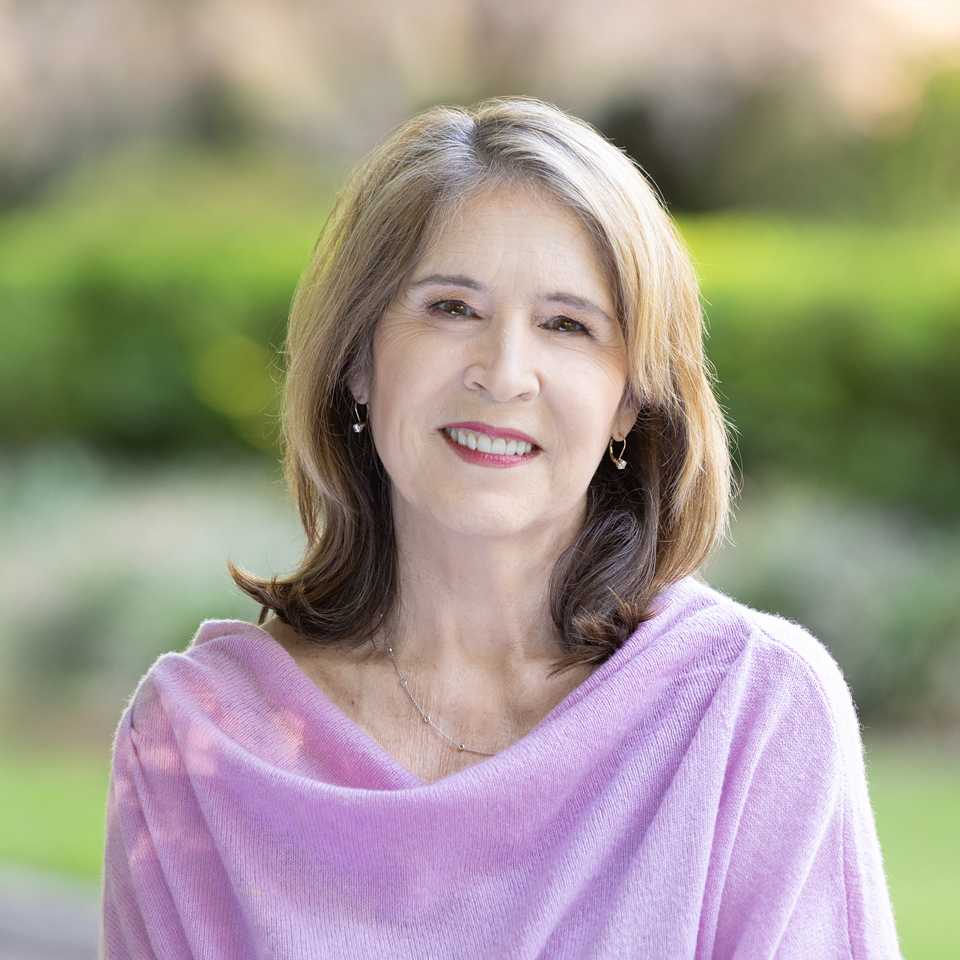
North Carolina native Sarah Carey grew up in Florida and holds an M.A. in English/Creative Writing from Florida State University. Her career spans journalism and veterinary medical communications at the University of Florida. She is the author of Bloodstream (2026, Mercer University Press) and The Grief Committee Minutes (2024, Saint Julian Press), an Eric Hoffer Award finalist. She also is the author of two chapbooks, including Accommodations, winner of the 2018 Concrete Wolf Chapbook Award. For more about Sarah and her work, visit SarahKCarey.com.
****
If you like this post, please share with your writerly friends and/or follow me on Facebook, Blue Sky, or Instagram. You can see all the FREE resources my site offers poets/writers on my Start Here page.
Discover more from Trish Hopkinson
Subscribe to get the latest posts sent to your email.
Categories: Guest Blog Posts, Poetry Craft, Self-taught MFA